How Old Is the Athabasca Glacier, and Is It Melting?
Markers along the trail to the ice tell the story before you reach it: small signs showing where the glacier's toe stood in past decades, each one a long walk from the ice today. The Athabasca Glacier is ancient, and it is shrinking fast enough to measure within a lifetime. Here is what its age really means, and what the melting looks like up close.
Explore the difference between a glacier’s history and the ice under your boots with an on-glacier guide. Explore The Guided Glacier Hike
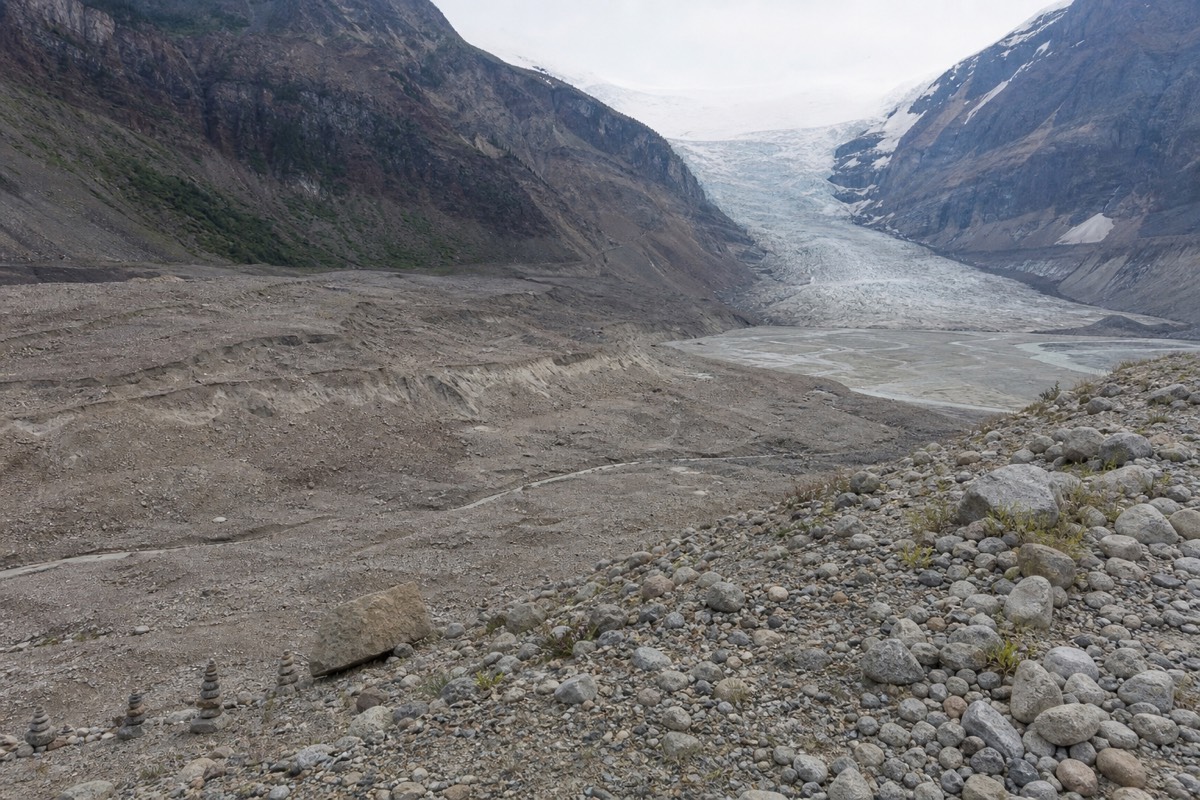
The Athabasca Glacier is a remnant of the last major ice age, and the ice you walk on at its toe is estimated to be up to about 10,000 years old. It is unmistakably melting. Parks Canada reports the glacier has been receding for roughly 125 years and now retreats by about five metres a year, with markers along the trail recording the loss.
How old is the Athabasca Glacier?
There is no single birthday to give. The Athabasca Glacier is one tongue of the much larger Columbia Icefield, built up over thousands of years as snow compacted into ice, and it is a leftover of the last major glaciation. The ice reaching the toe today is estimated to be up to about 10,000 years old, a figure treated as an estimate rather than an exact count.
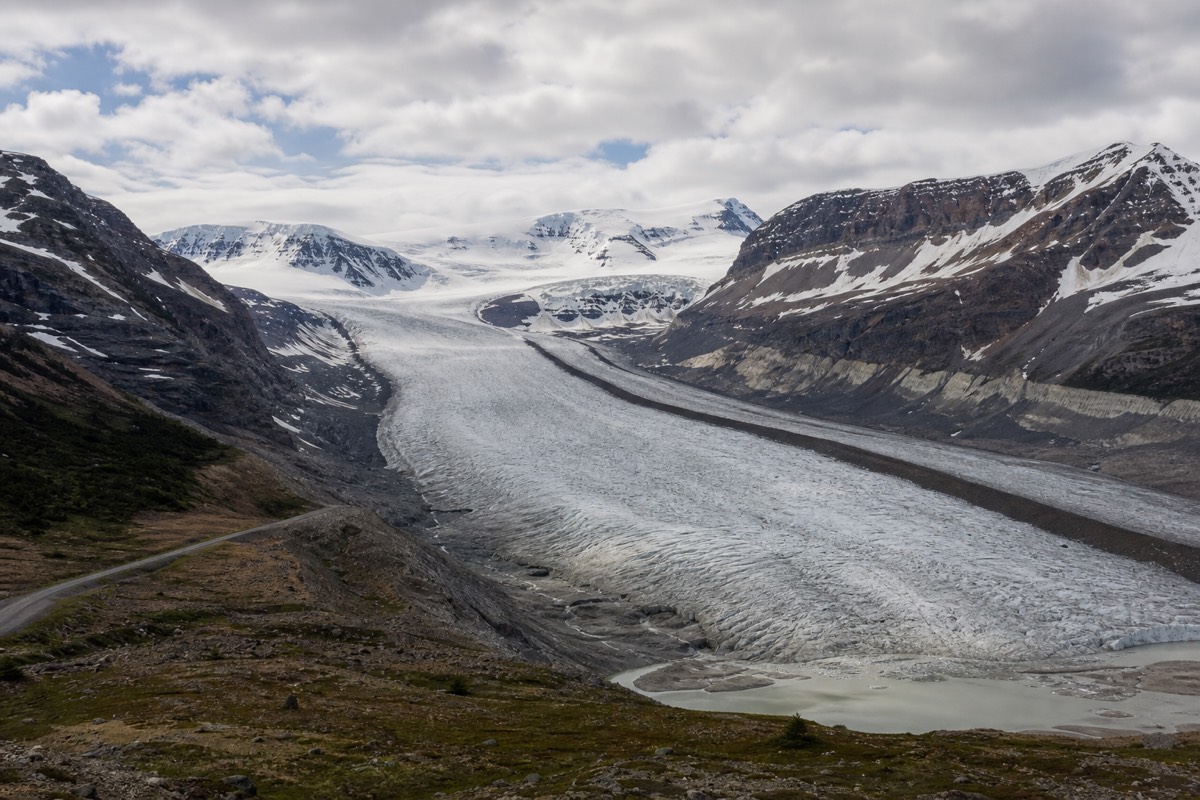
Glaciers do not form on a fixed date the way a building is finished. Snow falls, buries older snow, and slowly presses into dense blue ice that begins to flow downhill under its own weight. The ice you stand on near the toe fell as snow long ago and has taken centuries to travel down from the icefield above. That is why guides and our full Athabasca Glacier guide describe it as ancient ice: you are touching frozen water that predates almost everything human around it.
Is the Athabasca Glacier melting?
Yes, and the change is well documented. Parks Canada states the Athabasca Glacier has been retreating for about the last 125 years as the climate warms, with its toe pulling back toward its source in the Columbia Icefield. This is not a subtle shift you need instruments to notice; the trail markers alone make the retreat plain to any visitor.
Walk from the parking area toward the ice and you pass a line of dated signs, each marking where the glacier's edge once reached. The oldest sit surprisingly far from the current toe, which is the most direct way to grasp how much ice has vanished. The glacier is protected within the Canadian Rocky Mountain Parks UNESCO World Heritage Site, and its retreat is one of the clearest local signs of a warming climate anywhere in the Rockies.
How fast is it retreating?
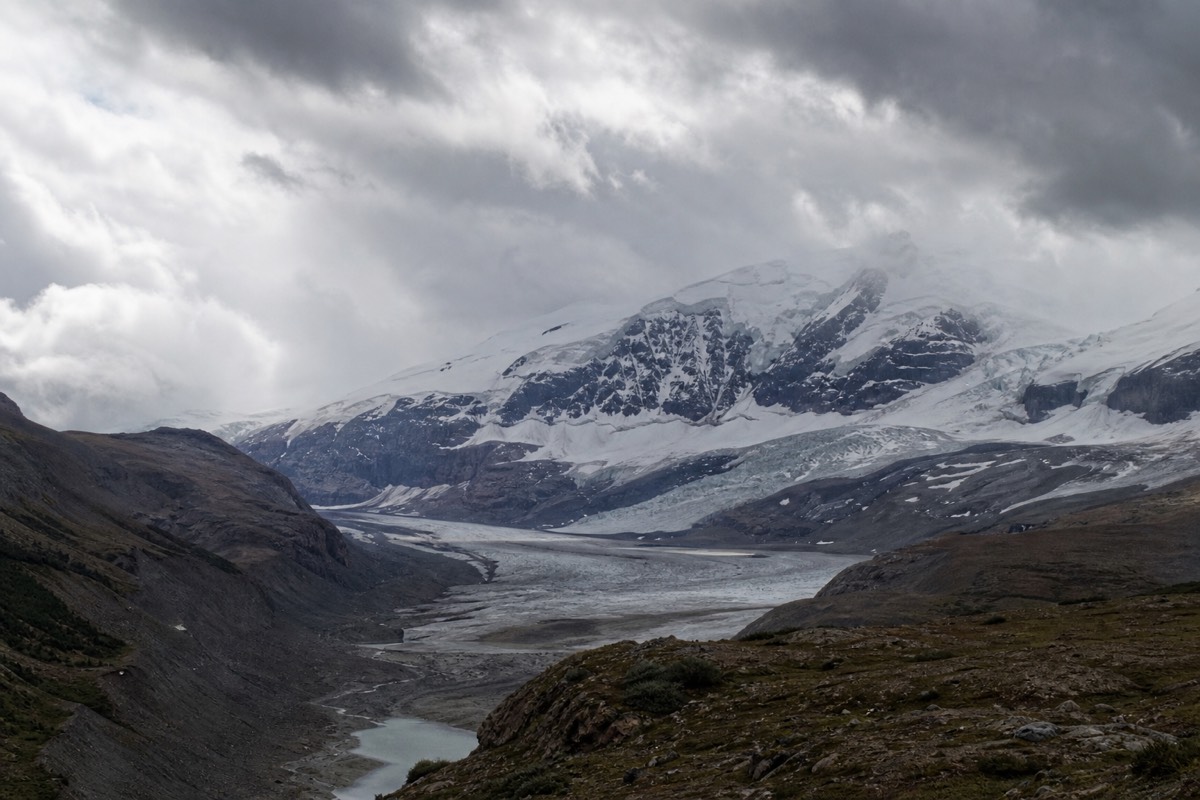
Faster than most people expect. According to Parks Canada, the glacier now shrinks by roughly five metres a year, has retreated about 600 metres since the 1960s, and has thinned by an average of around 60 metres over the same period. Recent seasons have accelerated, and the agency warns the glacier could largely disappear by 2100.
| Measure | What Parks Canada reports |
|---|---|
| Length of retreat | Receding for about the last 125 years |
| Current rate | Around 5 metres per year |
| Retreat since the 1960s | About 600 metres |
| Thinning since the 1960s | An average of about 60 metres |
| Recent melt | 2023 lost more ice than any year in the previous decade |
| Outlook | Could largely disappear by 2100 |
These are Parks Canada's own figures, and they are given as approximate ranges because a glacier does not retreat by a tidy amount each year. Warm summers pull it back faster; heavy snow years slow the loss. The direction, though, has been the same for well over a century.
Why is it melting?
A warming climate is the driver, as Parks Canada makes clear. Higher temperatures melt more ice in summer than winter snow can replace, so the glacier loses mass year after year. Once the surface thins and exposes darker rock, that ground soaks up more heat and speeds the melt further, which is part of why recent seasons have been so severe.
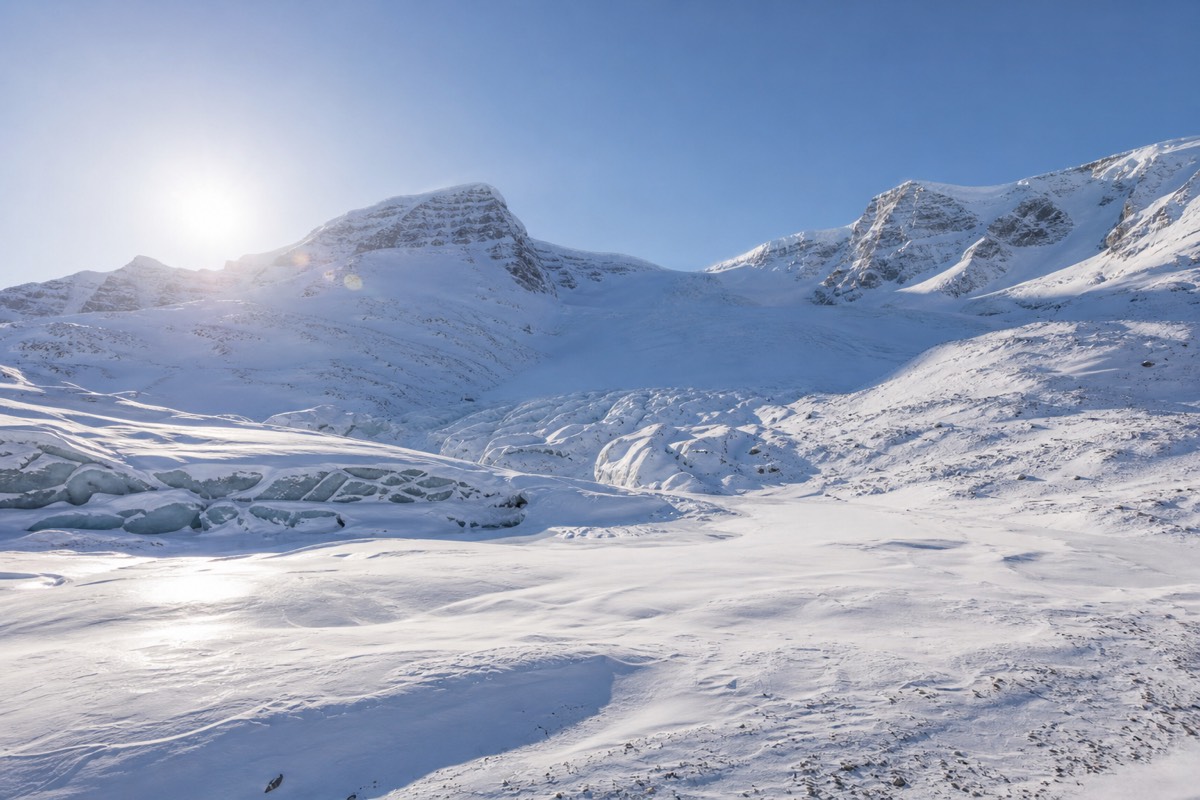
The icefield that feeds the glacier is not immune either. It supplies the Athabasca and other glaciers, and as it thins, less ice flows down to replenish the toe. The result is a glacier retreating from both ends of the equation: melting faster at the bottom while receiving less from above. It is a slow process by human standards and a rapid one by geological ones.
Can you still walk on it?
Yes. For now the glacier is very much accessible, and standing on it remains the reason most people make the trip. Guided outings ride specialized vehicles onto a safe section of the ice, or lead walking groups onto the surface, so you can experience the glacier directly even as it shrinks.
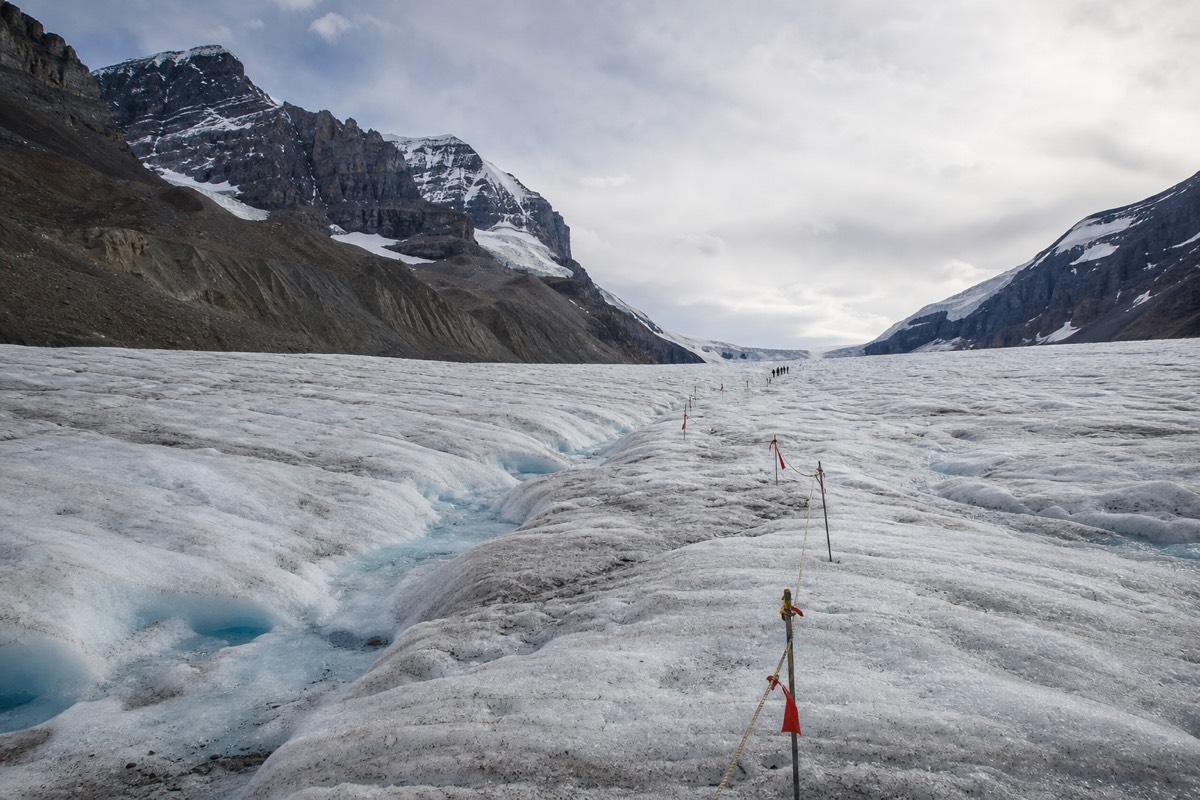
The safe route matters, because a glacier is riddled with crevasses and thin spots that are dangerous to cross alone. That is why access is guided. You can reach the surface on a guided day trip onto the ice, and the mechanics of the vehicle that carries you are covered in our guide to riding the Ice Explorer onto the toe. Either way, you walk on ice that has been here for thousands of years and is retreating within a single one.
Should you visit the Athabasca Glacier now?
If seeing a living glacier is on your list, sooner is better than later. The ice is not vanishing next season, but it is smaller every year, and the retreat is expected to continue. Visiting now means walking on a stretch of glacier that future travellers may only read about, and doing it responsibly while it is still here.
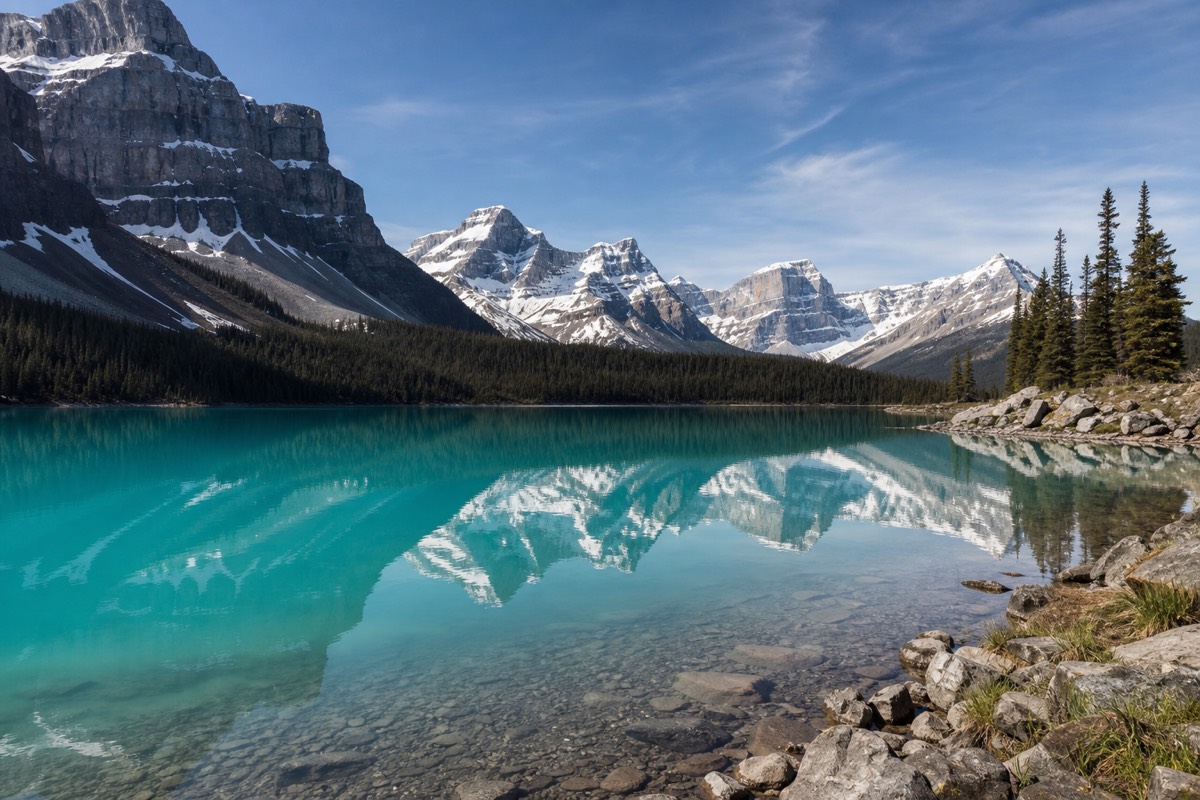
An all-inclusive option like a one-way glacier journey between Lake Louise and Jasper pairs the ice with the wider landscape it shapes, from meltwater falls to turquoise lakes coloured by glacial silt. The whole region sits within protected national parks, so tread lightly and follow your guide. When you are ready to plan, you can compare the guided days on offer at Columbia Icefield Tours and choose one that puts you on the ice while it lasts.