Lake Louise to Jasper: The One-Way Glacier Journey Explained
Driving from Lake Louise to Jasper is not a transfer. It is one of the great mountain roads on the planet, and the one-way glacier journey turns the 230 kilometres between the two into the day itself: turquoise lakes, hanging glaciers, a ride onto the ice, a glass-floored walkway and a waterfall, ending at a Jasper hotel door instead of back where you started. Here is exactly how it works, stop by stop.
Combine the move from Lake Louise to Jasper with the Ice Explorer, Skywalk and lunch. Explore The Journey To Jasper
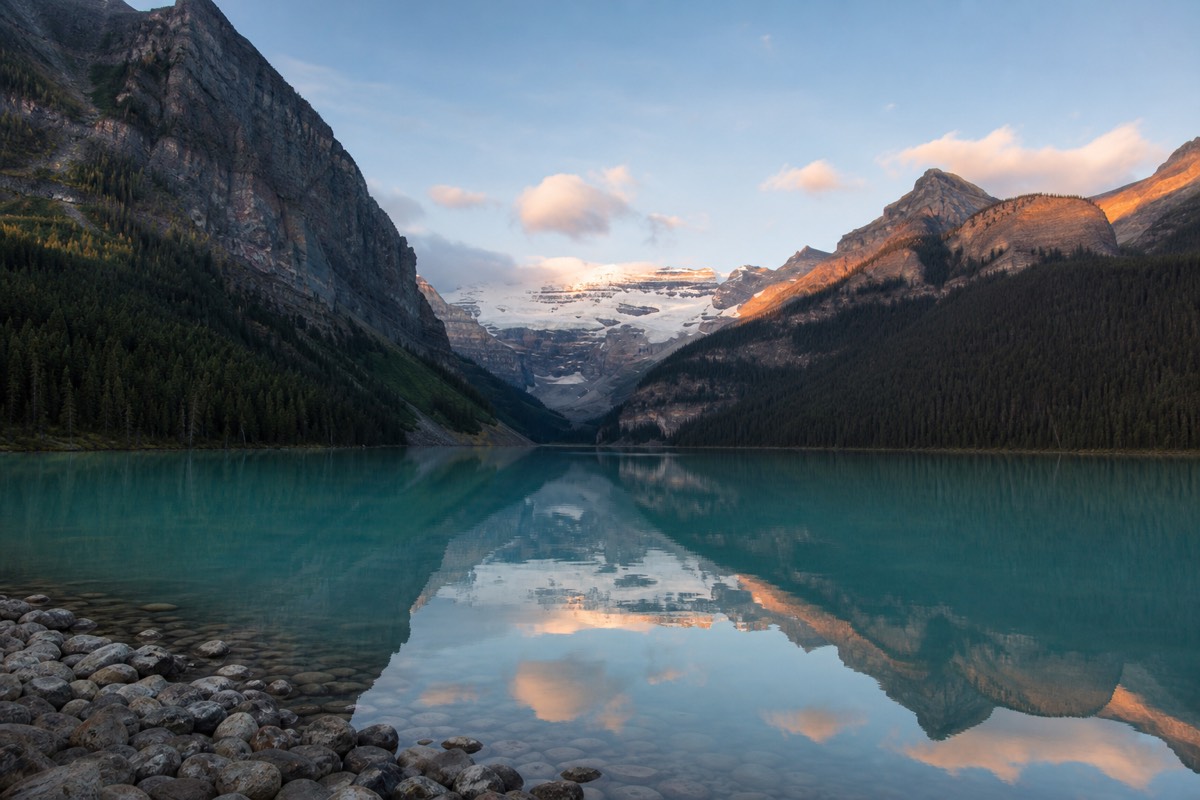
The mistake people make is treating the gap between Lake Louise and Jasper as distance to be covered. It is the opposite. This stretch of Highway 93 is the reason to come, and the one-way journey is built around that truth: instead of driving up, seeing the ice, and driving all the way back, you travel the corridor once, in a straight line, and step off at a Jasper hotel. Here is the full picture, from what it is to whether it fits your trip.
The Lake Louise to Jasper route, stop by stop
Approximate distances north from Lake Louise along the Icefields Parkway (Highway 93). The Columbia Icefield, near the halfway point, is where the on-ice time happens. Distances are rounded for planning and shift slightly by exact viewpoint.
What is the Lake Louise to Jasper one-way glacier journey?
It is a guided, one-direction day tour that runs the roughly 230 km Icefields Parkway from Lake Louise to Jasper, folding in the region's marquee stops along the way. A typical version lasts about 10 hours, includes a ride onto the Athabasca Glacier, the Glacier Skywalk, lunch and hotel pickup and drop-off, and ends in Jasper rather than returning south.
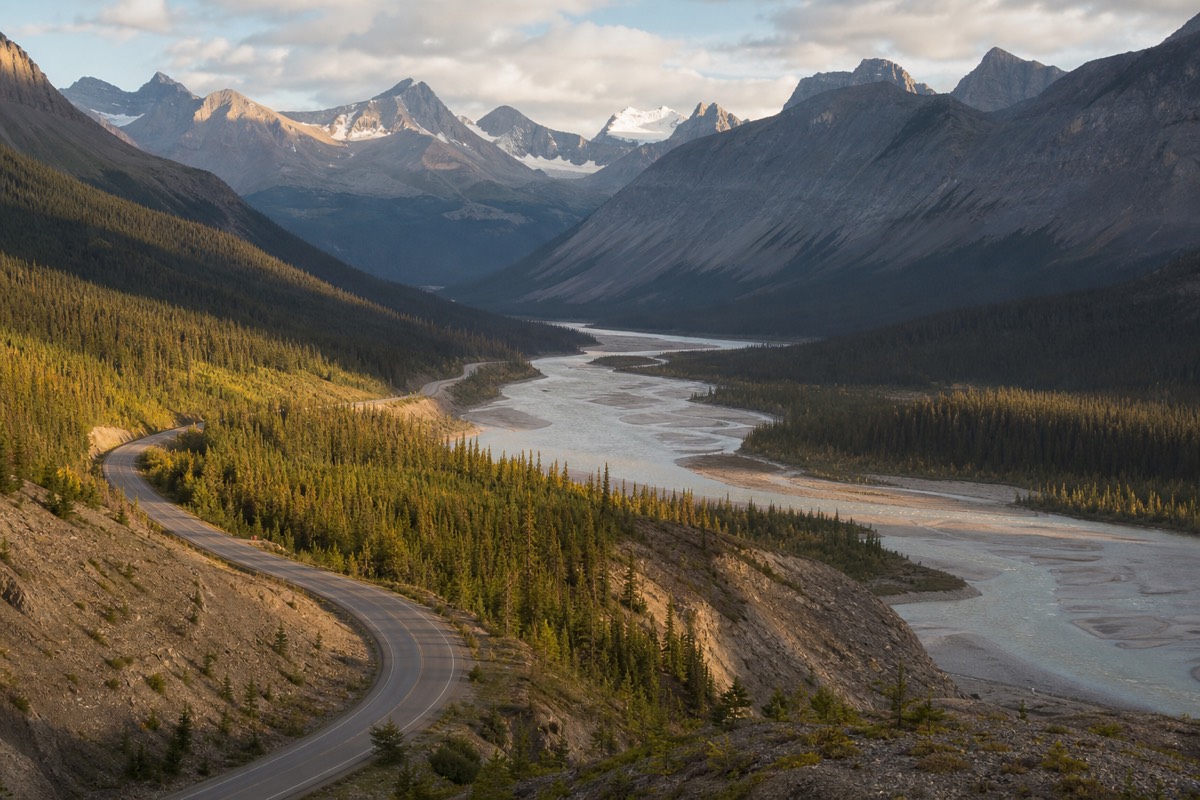
The point of difference is in the name: one way. A standard glacier day trip is a loop that brings you back to your starting town, which is ideal if your base does not change. This journey is for travellers whose trip moves from the Banff and Lake Louise area up to Jasper, so the drive doubles as the transfer. You see everything a round-trip tour sees, minus the backtrack, and you arrive in a new town with the whole afternoon of scenery already behind you. The heart of it, as with every version, is walking on the Athabasca Glacier.
What is the route, and what do you stop at?
The journey climbs north from Lake Louise past Bow Lake and Crowfoot Glacier in the first stretch, crosses the Saskatchewan River, reaches the Columbia Icefield near the halfway point for the on-ice time, then drops toward Jasper past Athabasca Falls. Each stop is a short pause or a set-piece experience, paced so the ice gets the most time.
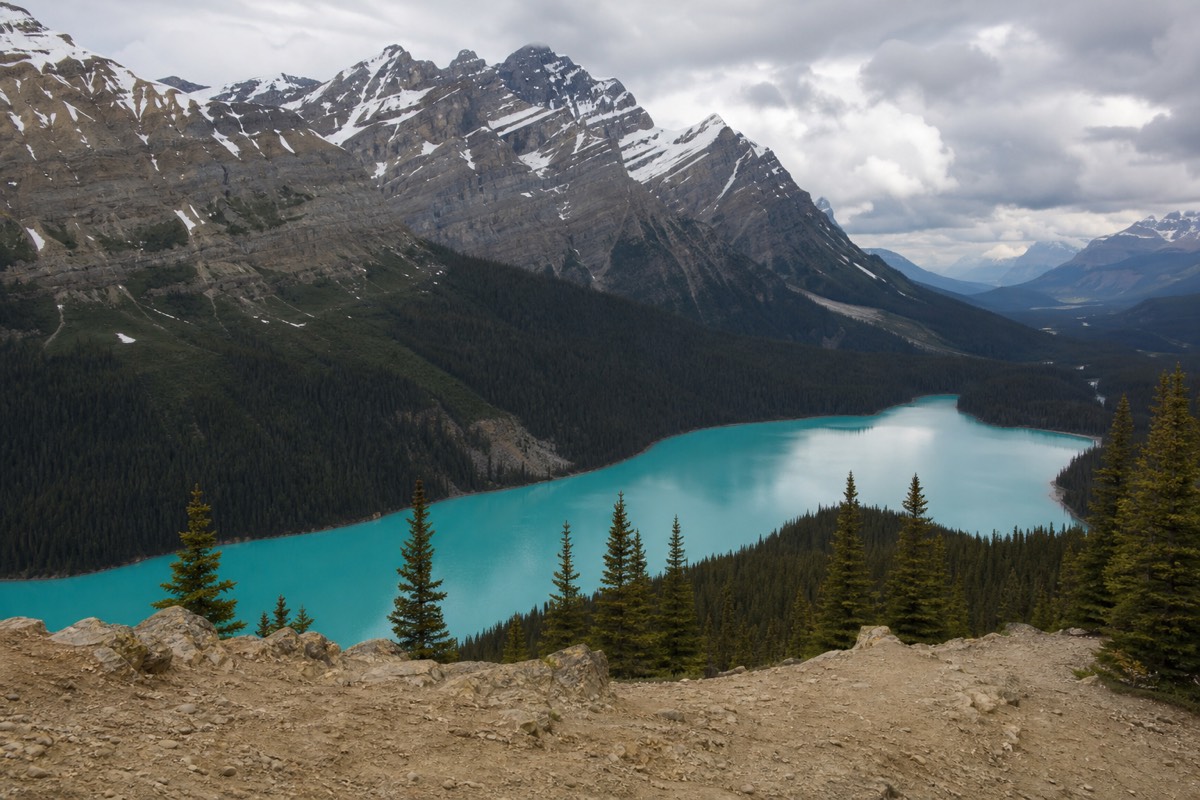
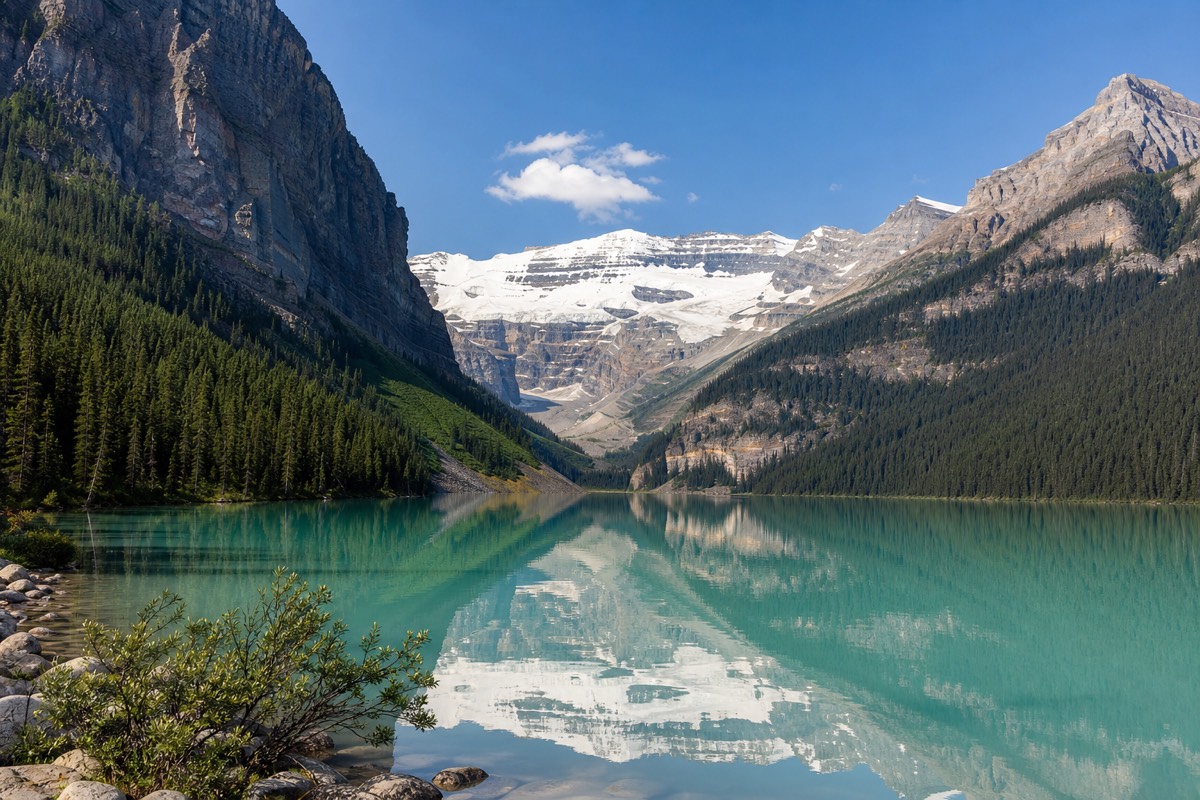
The sequence matters because the light and the crowds shift through the day. Mornings are for the mirror-calm lakes in the south, midday is the ice, and the afternoon carries you down to the falls and into Jasper. The famous turquoise comes from glacial flour, fine rock ground by the ice and suspended in the water, which is why these lakes glow in a way ordinary alpine lakes do not. For the stops in fuller detail, our Icefields Parkway drive guide walks the whole corridor.
| Stop | Roughly from Lake Louise | What happens | Time there |
|---|---|---|---|
| Bow Lake and Crowfoot Glacier | ~33 km | Photo stop, mirror water and a hanging glacier | Short |
| Peyto Lake | ~40 km | Short walk to the wolf-head turquoise viewpoint | Short |
| Saskatchewan River Crossing | ~77 km | Comfort and fuel stop, valley views | Brief |
| Columbia Icefield | ~127 km | Ice Explorer onto the glacier and the Skywalk | Longest, the centrepiece |
| Athabasca Falls | ~200 km | Short walk to the powerful canyon falls | Short |
| Jasper | ~230 km | Hotel drop-off, journey ends | Arrival |
What are the stops like beyond the glacier?
The lakes and the falls are set-pieces in their own right, not filler between the ice. Bow Lake and Crowfoot Glacier open the day with mirror water under a hanging glacier. Peyto Lake is a nearby Parkway highlight, but it is not confirmed on this tour’s published itinerary. Athabasca Falls, near the Jasper end, sends the river thundering through a narrow canyon. Each is a short stop, and together they carry the drive.
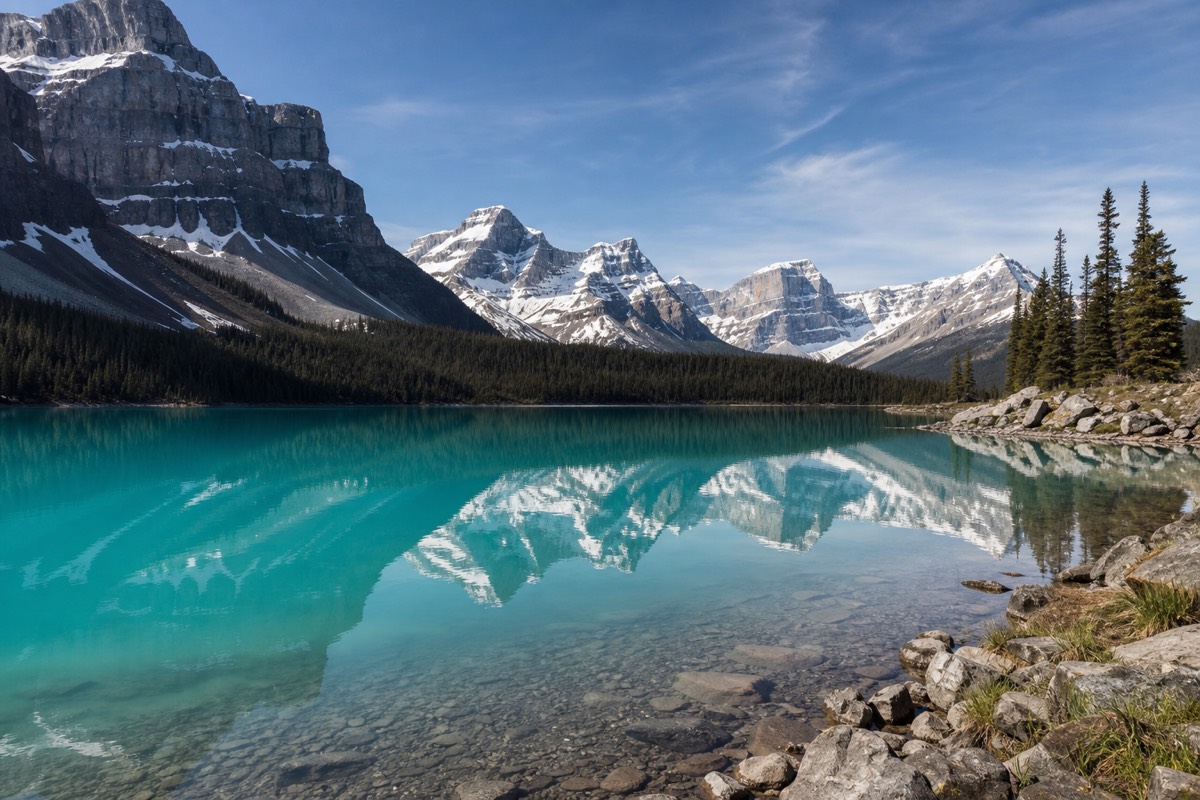
What links them is the colour. The turquoise you see at Bow and Peyto comes from glacial flour, rock ground to powder by moving ice and held in suspension, which scatters light toward that unreal blue-green on a bright day. Peyto rewards a short uphill walk to its viewing platform, and the calmest reflections at Bow tend to come early before the wind picks up. Athabasca Falls is less about colour and more about force, a reminder that the same ice you rode on becomes the river carving the rock below. Keep behind the railings, because the wet stone near the falls is slick.
| Stop | Why it earns the pause | A practical tip |
|---|---|---|
| Bow Lake and Crowfoot Glacier | Mirror water beneath a hanging glacier | Best reflections early, before the breeze |
| Peyto Lake | The wolf-head turquoise from the overlook | Short uphill walk to the platform |
| Saskatchewan River Crossing | The valley opens, a comfort and fuel stop | Good spot to stretch and grab a drink |
| Athabasca Falls | Powerful canyon falls near Jasper | Stay behind the railings on wet rock |
Why go one way instead of a round trip?
Because it saves hours and matches how people actually travel the Rockies. A round-trip glacier tour drives the same 130 km twice. The one-way journey covers new ground the whole day and delivers you to Jasper with your luggage, so you do not backtrack to a town you have already left. If your itinerary runs south to north, it is simply the efficient shape.
There is a comfort angle too. Hotel pickup in Lake Louise and drop-off in Jasper means your bags travel with you and you never touch a steering wheel on one of the more demanding mountain roads in the country. That matters more than it sounds, because fatigue on the return leg of a self-driven round trip is a real safety issue after a long day at altitude. If you are planning where to sleep at each end, our guide to where to stay near the ice covers the lodging maths this journey quietly solves.
The one-way format also changes how you feel by the end of the day and what you can carry through it. Because your luggage travels with you from a Lake Louise pickup to a Jasper drop-off, there is no shuttling bags between hotels and no scramble to hit a fixed evening deadline in a town you were rushing back to. You step off rested rather than wired from a long night drive on an unlit mountain road, ready to start exploring Jasper fresh the next morning. For a trip that is already heading north, that is a real gain rather than a marketing line, and it is the quiet reason many travellers prefer the one-way shape once they have done the sums.
What is included, and what is not?
A full one-way journey typically includes the driver and guide with live commentary, the Ice Explorer ride onto the Athabasca Glacier, admission to the Glacier Skywalk, lunch, and door-to-door hotel transfer between Lake Louise and Jasper. It usually excludes extra snacks and drinks, gratuities, souvenirs and travel insurance. Always confirm the exact inclusions on the live listing.
The bundled glacier activities are the reason the price sits higher than a plain sightseeing tour. Bought separately, the Ice Explorer and Skywalk combination runs around CA$125 per adult, and adding lunch and the point-to-point transfer on top is the value the package captures. That is a meaningful contrast with the loop tours, where the glacier tickets are often an extra you buy yourself. To see those on-ice experiences in depth, read our guides to the Ice Explorer ride onto the glacier and the glass-floored Glacier Skywalk.
| Usually included | Usually not included |
|---|---|
| Expert driver and guide, live commentary | Extra snacks and drinks |
| Ice Explorer ride onto the Athabasca Glacier | Gratuities |
| Glacier Skywalk admission | Souvenirs from the Discovery Centre |
| Lunch | Travel insurance |
| Door-to-door hotel transfer, Lake Louise to Jasper | Personal photography gear |
How long does it take, and how is the day paced?
Plan on about 10 hours from pickup to Jasper drop-off. Roughly four to five of those are moving, spread across the 230 km, with the balance split between the lake viewpoints, the roughly two hours at the Columbia Icefield, lunch and the falls. It is a long, full day rather than a rushed one, because the driving is broken by frequent stops.
The pacing puts the centrepiece in the middle. You reach the ice near midday, do the glacier ride and the Skywalk in sequence, eat, then let the afternoon ease you north to the falls and into Jasper, a town that sits about an hour north of the ice. Because the day ends in a different town, there is no late return drive hanging over the schedule, which is part of why it feels less tiring than a same-distance loop. The table below is a realistic shape, though exact timings vary by operator and season.
| Roughly | Where | What you are doing |
|---|---|---|
| Morning | Lake Louise to Peyto | Pickup, then the southern lakes and glaciers |
| Late morning | Saskatchewan Crossing | Comfort stop, climbing toward the ice |
| Midday | Columbia Icefield | Ice Explorer, then the Skywalk |
| Early afternoon | Discovery Centre | Lunch and glacier views |
| Afternoon | Athabasca Falls | Short walk to the falls, then north |
| Late afternoon | Jasper | Hotel drop-off, journey ends |
What does it cost, and is it worth it?
Expect a one-way journey to sit around $270 per person, with the exact figure on the live listing, because it bundles the glacier activities, lunch and the transfer that other tours charge separately. Whether it is worth it comes down to your route: if you were moving from Lake Louise to Jasper anyway, it replaces a transfer you would pay for regardless with a full day of experiences.
Value here is really about avoided double-counting. Add up a private or shuttle transfer between the towns, plus glacier tickets around CA$125, plus lunch, and the bundled day starts to look efficient rather than expensive. It is poor value only if you did not need to reach Jasper at all, in which case a cheaper loop tour from your base makes more sense. For the wider price picture, see our breakdown of what the tour costs and our honest read on whether it is worth it.
One-way, round-trip or self-drive: which should you pick?
Pick the one-way journey if your trip runs south to north and ends in Jasper, since it bundles the glacier activities, lunch and the transfer into one guided day. Choose a round-trip loop if you are staying put in one town and returning there. Self-drive if you want total freedom, have a car, and are happy to buy the glacier tickets, around CA$125, and drive the long day yourself.
The three options really answer three different questions. The one-way tour solves a routing problem and a driving problem at once, which is why it suits travellers relocating from the Banff area to Jasper. A loop tour is the tidy answer when your hotel does not change and you just want the ice and the lakes for a day. Self-driving wins on flexibility and, if you skip the packaged extras, on price, at the cost of a demanding drive and the errand of booking the current tickets and prices for the ice yourself. Weigh them against your own itinerary rather than on cost alone.
| Factor | One-way journey | Round-trip loop | Self-drive |
|---|---|---|---|
| Who drives | Your guide | Your guide | You, roughly 260 km round trip |
| Backtracking | None, ends in Jasper | Returns to your start town | Up to you |
| Glacier tickets | Bundled in | Often an added extra | You buy, around CA$125 |
| Lunch | Included | Sometimes | On your own |
| Ends in | Jasper | Your start town | Wherever you drive |
| Best for | South-to-north itineraries | One-base stays | Independent drivers |
Who is this journey best for, and who should skip it?
It suits travellers moving from the Banff and Lake Louise area to Jasper who want the drive to be the day, do not want to rent a car or drive the Parkway themselves, and value having the glacier activities bundled. Skip it if you are staying put in one town, want to linger far longer at any single stop, or are on a tight budget with your own vehicle.
Independent drivers who love to set their own pace and stop wherever the light is good may prefer to self-drive and buy glacier tickets separately. Those short on time or nervous about a long alpine drive get the most from handing it over. If you want the flexibility of choosing your own stop lengths while still not driving, a private door-to-door tour booked through Columbia Icefield Tours gives you the guide and the transfer with a schedule you help shape.
| Great for | Less suited to |
|---|---|
| South-to-north Rockies itineraries ending in Jasper | Travellers based in and returning to one town |
| Non-drivers and nervous mountain drivers | Independent drivers who want total freedom |
| Those who want glacier activities bundled in | Budget travellers with their own car |
| Anyone wanting luggage carried between towns | Visitors wanting hours at a single viewpoint |
What should you know before you go?
Dress for cold on the ice even in summer, bring sun protection for the glare, and confirm the direction, since some operators run it northbound from Lake Louise and others offer the reverse. Weather at 2,000 metres is changeable, the glacier runs far colder than the valley, and the season for the ice activities is roughly early May to mid-October.
A few practical calls smooth the day. Pack a warm layer and a waterproof shell in a small daypack, keep sunglasses and sunscreen handy for the reflected light on the ice, and eat a good breakfast because the driving starts early. Confirm whether your hotel is inside the pickup zone when you book. If Jasper is your end point, it also helps to know how far Jasper sits from the ice so the afternoon timing makes sense, and you can cross-check the current season dates with Banff Jasper Collection and road conditions on the Icefields Parkway resource before you travel. For a southbound-return alternative that loops back rather than ending in Jasper, compare it with a standard full-day glacier and lakes tour.
One more thing worth settling in advance is your energy for the day. Ten hours on the road, even a beautiful one, asks something of you, and the altitude at the ice can leave first-time visitors a little light-headed until they adjust. Eat a real breakfast, keep water within reach, and resist planning a demanding activity for the same evening you land in Jasper. Pace it that way and the day feels expansive rather than draining, ending with the quiet satisfaction of having crossed one of the great mountain corridors on the continent in a single unbroken arc, glacier ice underfoot at its midpoint.