Where to Stay Near the Columbia Icefield: Camping, Lodge & Hotels
There is exactly one hotel at the Columbia Icefield, and it books out months ahead. Everything else means a drive, whether that is a campground down the road, a lodge along the Parkway, or a proper hotel room in Jasper or Lake Louise. Where you sleep quietly decides how early you reach the ice, whether you catch it at sunrise, and how far you backtrack. This guide sorts the real options by distance and by who they suit.
If Jasper is your overnight base, a hotel-pickup day tour avoids a separate drive to the icefield. Explore The Jasper Glacier Day
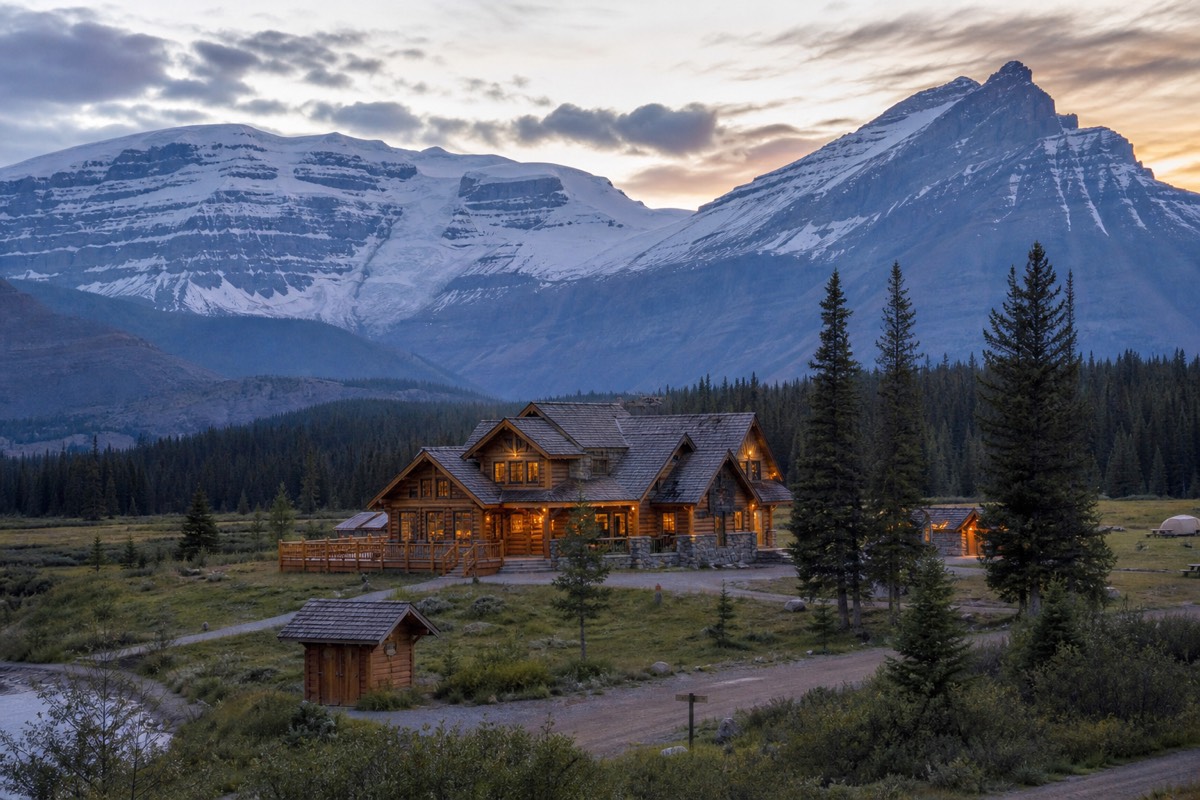
Most people plan the glacier and forget the bed, then discover in April that the one hotel at the ice has been full since winter. The lodging map here is short and a little awkward, because the Columbia Icefield sits in protected wilderness with almost nothing built around it. That constraint is also the opportunity: sleep close and you can have the ice nearly to yourself at dawn. Here is every realistic option, sorted by how far it sits from the glacier.
Where to sleep, by distance from the ice
Approximate road distances from the Glacier Discovery Centre to each lodging option along the Icefields Parkway. Openings and nightly rates change every season, so treat this as a map of what exists rather than a live availability list, and confirm current dates before you book.
Where should you stay to visit the Columbia Icefield?
You have four honest choices: the single lodge right at the ice, a Parks Canada campground a few minutes south, a scattering of lodges along the Icefields Parkway, or a full hotel in Jasper or Lake Louise, each about a two-hour drive away. Sleeping at or near the ice buys early access and sunset light. Basing in a town buys comfort, dining and choice.
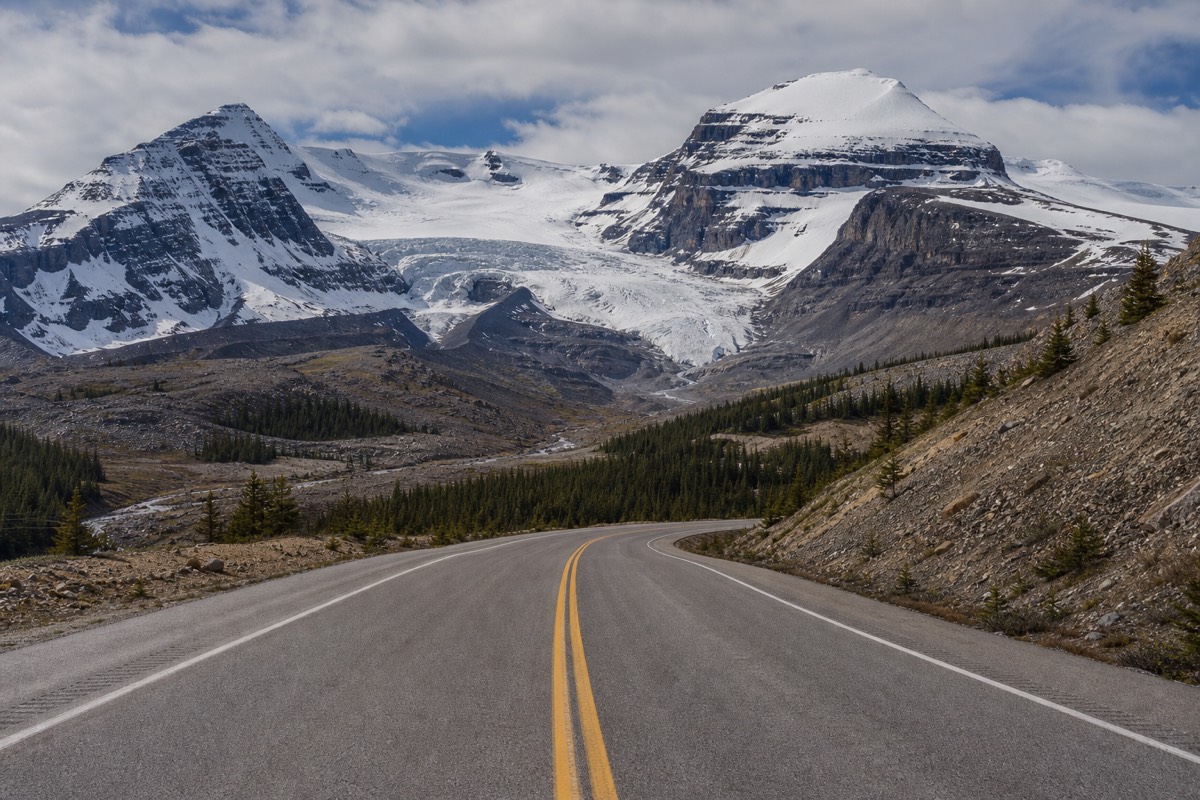
The right answer depends on what you value. If a quiet sunrise on the glacier is the dream, you sleep as close as you can and accept the limited comforts. If you want restaurants, shops and a real bed after a long day, you base in a town and treat the icefield as a day trip. Before you commit, it helps to know exactly how far the icefield sits from each base, because those distances shape the whole decision.
| Option | Type | Distance from the ice | Season | Best for |
|---|---|---|---|---|
| Glacier View Lodge | Hotel at the ice | At the Discovery Centre | Summer only | Sunrise and sunset on the glacier |
| Wilcox Creek and Columbia Icefield campgrounds | Campground | ~3 km | Summer only | Budget, tents and small RVs |
| The Crossing Resort | Roadside lodge | ~50 km south | Summer only | A halfway base with fuel and food |
| Sunwapta Falls Rockies Lodge | Roadside lodge | ~55 km north | Summer only | Quiet, on the Jasper side |
| Jasper townsite | Town hotels | ~105 km north | Year-round | Dining, choice, closest town |
| Lake Louise | Village and resort | ~130 km south | Year-round | Pairing the ice with the southern lakes |
Is there a hotel at the Columbia Icefield itself?
Yes, one. Glacier View Lodge sits inside the Discovery Centre, directly opposite the Athabasca Glacier, and it is the only accommodation right at the ice. Rooms look out at the glacier, it opens only for the summer season, and because it is the single option on site it books out months ahead. If you want it, reserve early.
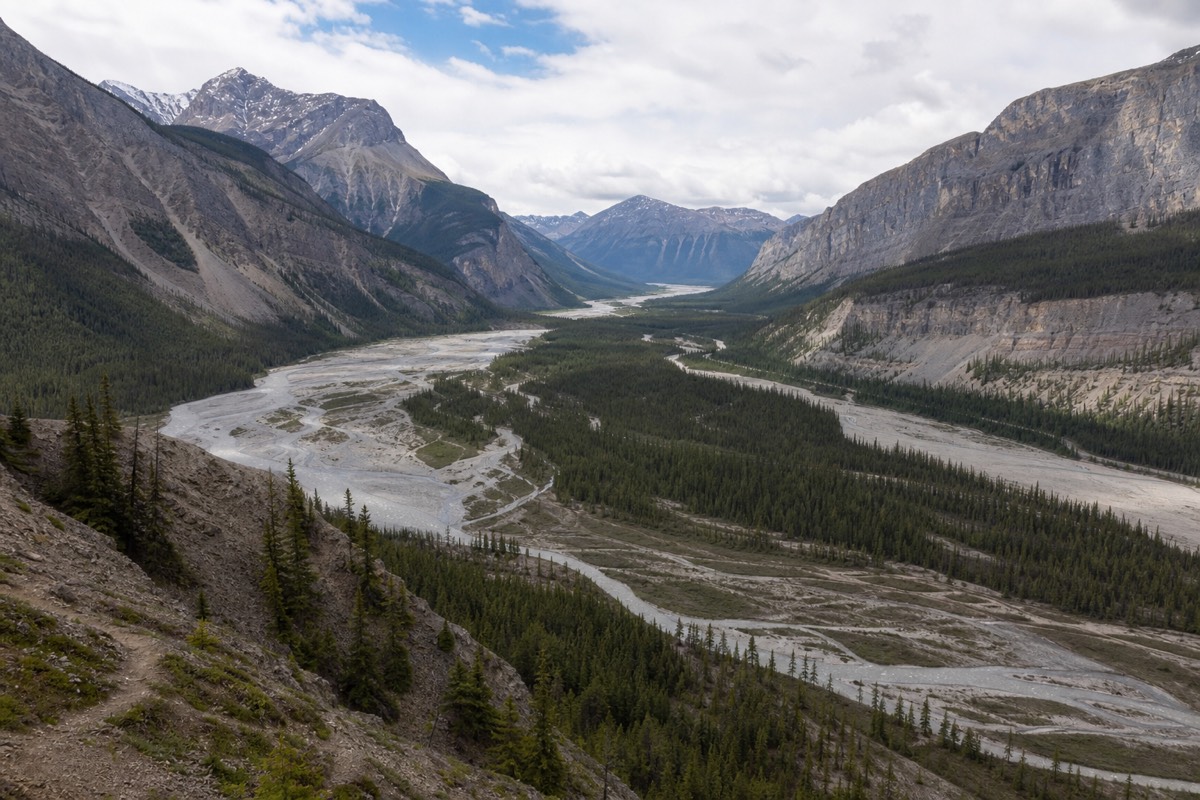
The appeal is simple and hard to match anywhere else: you are already at the glacier when the day-trip coaches are still hours away in Banff and Jasper. That means a near-empty viewpoint at first light and again at dusk, plus the glow of alpenglow on the ice that most visitors never see. The trade-off is that everything else is remote, dining is limited to what the centre offers, and the price sits at the premium end. Confirm current rates, dates and availability directly with Banff Jasper Collection, which runs the lodge, and read our walk-through of the Glacier Discovery Centre so you know what the building around your room actually holds.
Can you camp near the Columbia Icefield?
Yes. Two Parks Canada campgrounds sit within a few minutes of the Discovery Centre: Wilcox Creek and the Columbia Icefield campground, both a short drive south on Highway 93. They are seasonal, basic and inexpensive, suited to tents and smaller RVs, and they put you closer to the ice than any option except the lodge above. Facilities are minimal, so arrive self-sufficient.
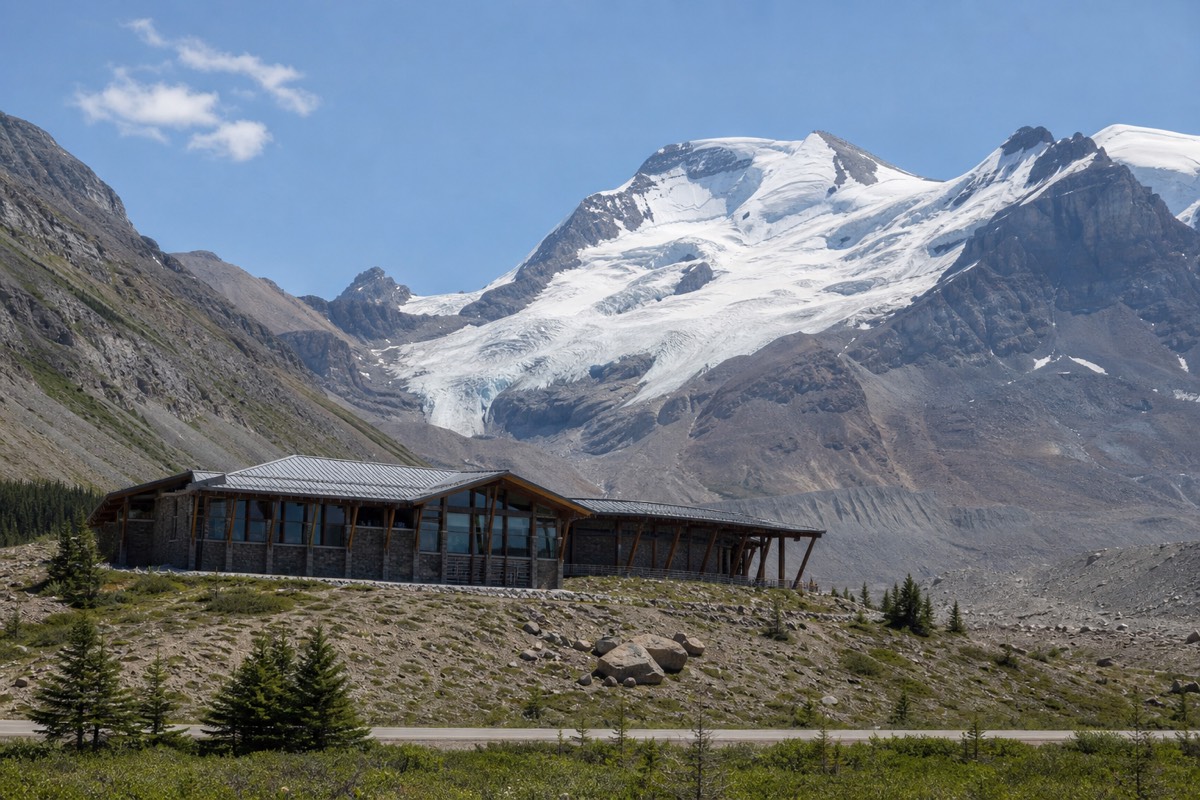
Camping is the budget way to wake up at the glacier. You get the same early-access advantage as the lodge at a fraction of the cost, in exchange for cold high-altitude nights and no hookups or showers to speak of. Nights near 2,000 metres are genuinely cold even in July, so pack a serious sleeping bag. Availability and the reservation-versus-first-come rules shift year to year, so check the current status with Parks Canada before you rely on a site being open. If you are weighing a summer visit, our notes on the best time to visit cover just how cold those campground nights get.
| Campground | Roughly | Suited to | Notes |
|---|---|---|---|
| Columbia Icefield campground | Minutes from the centre | Tents | Small, basic, closest to the ice |
| Wilcox Creek campground | ~3 km south | Tents and smaller RVs | Basic services, cold nights |
| Both | Summer season only | Budget travellers | A modest park campground fee, self-sufficient camping |
What lodges sit along the Icefields Parkway?
A handful of seasonal lodges break up the long Parkway between the towns. The Crossing Resort at Saskatchewan River Crossing sits about 50 km south of the ice with fuel and food. Sunwapta Falls Rockies Lodge lies roughly 55 km north toward Jasper. Farther south, the historic Num-Ti-Jah Lodge overlooks Bow Lake. All are summer-only. None is at the ice, but each turns the drive into two shorter halves.
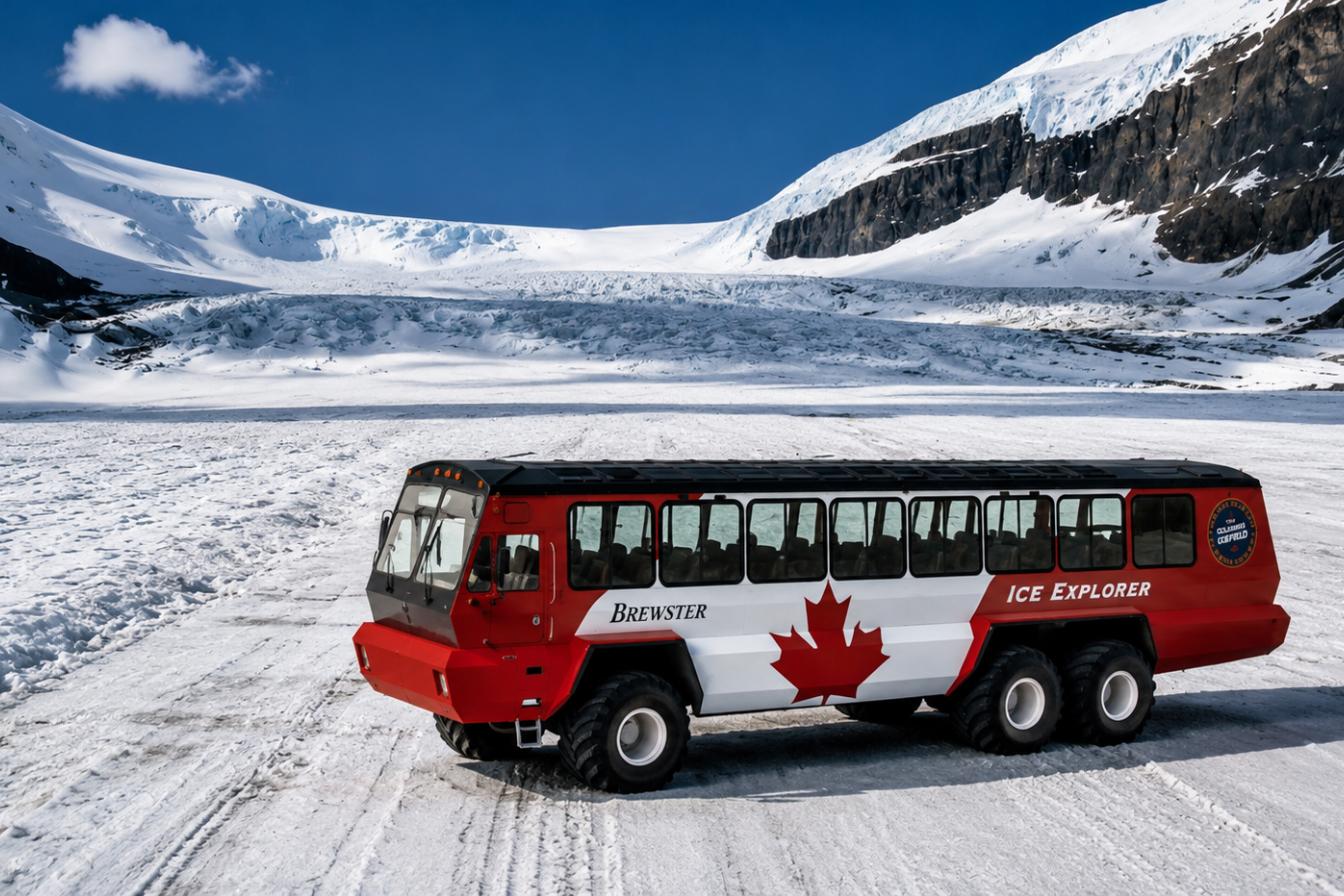
These roadside lodges suit travellers who are moving through rather than parking in one town, and who want to be inside the mountains rather than in a busy townsite. The Crossing is the natural halfway house on a self-drive up the Parkway, useful for fuel as much as a bed, since services this deep in the corridor are thin. Book any of them well ahead, because rooms are few and demand is high all summer. When you plan the route between them, our Icefields Parkway drive guide lays the stops out in order so you can pace the day.
| Lodge | Where | Character | Handy for |
|---|---|---|---|
| The Crossing Resort | ~50 km south, Saskatchewan River Crossing | Roadside motel-style | Fuel, food, a halfway base |
| Sunwapta Falls Rockies Lodge | ~55 km north toward Jasper | Quiet lodge and cabins | The Jasper side of the ice |
| Num-Ti-Jah Lodge | ~75 km south, Bow Lake | Historic lakeside lodge | Pairing with Bow and Peyto lakes |
| Hostelling International wilderness hostels | Scattered along the Parkway | Very basic, off-grid | Budget travellers, check openings |
Should you base in Jasper or Lake Louise instead?
For most visitors, yes. Jasper is the closest full town at about 105 km north, roughly a 75-minute drive, with the widest range of hotels and restaurants. Lake Louise sits about 130 km south and pairs the icefield with the famous southern lakes. Banff is farther still. A town base trades early glacier access for comfort, dining and far more room choice.
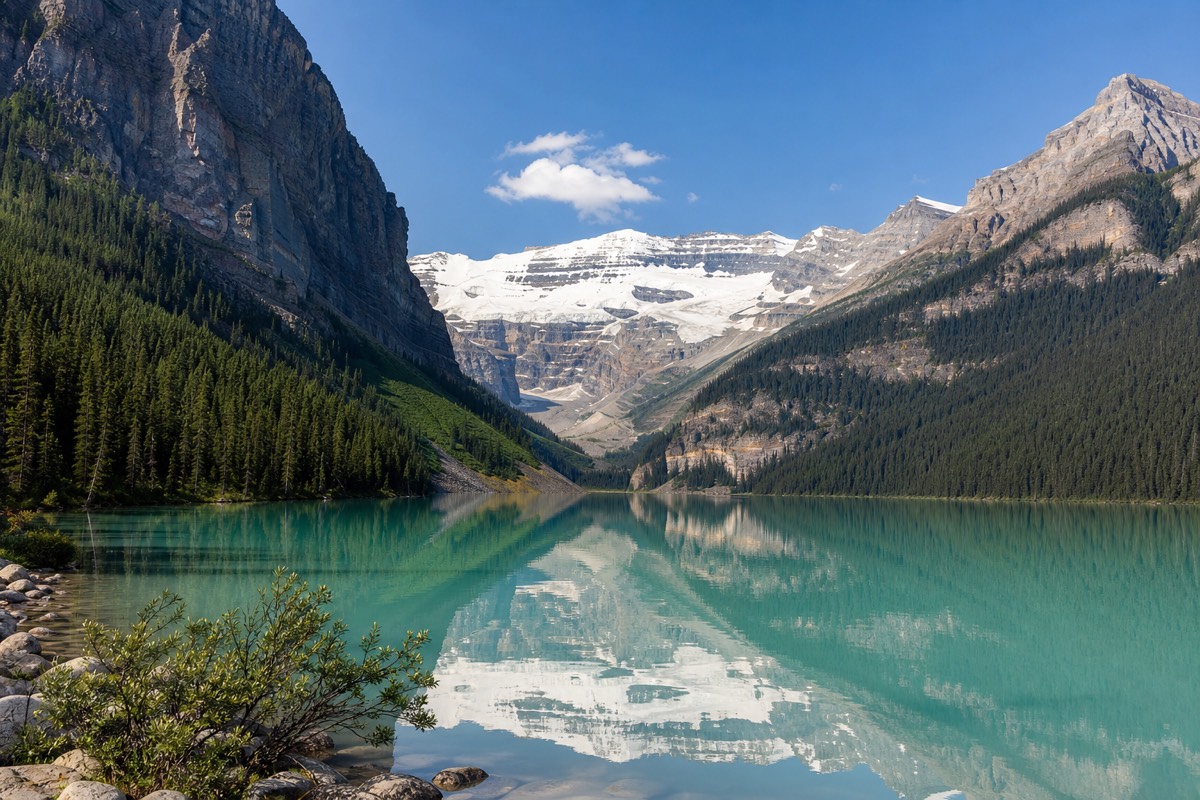
Think about the shape of your wider trip. If you are exploring the northern Rockies, Jasper is the obvious hub and the icefield is an easy half-day from it. If your holiday centres on Banff, Lake Louise and the turquoise lakes, base there and drive up. Both towns give you a real bed, hot food and a shop for the layers you forgot. The cost is the two-hour-each-way drive and a mid-morning arrival at the ice, when it is busiest. Coming from the south end that long drive is exactly what a guided departure from Calgary, Canmore and Banff removes.
| Town base | Distance to the ice | Strengths | Trade-off |
|---|---|---|---|
| Jasper | ~105 km, ~1 hr 15 min | Closest town, good dining, wide choice | A bit removed from the southern sights |
| Lake Louise | ~130 km, ~1 hr 45 min | Pairs the ice with Lake Louise and Moraine | Limited village lodging, books early |
| Banff | ~185 km, ~2 hr 45 min | Most services and nightlife | Longest drive, earliest start needed |
How does where you stay change your glacier day?
Distance sets your start time and your light. Sleep at the ice and you own sunrise and sunset with no crowds. Stay in a Parkway lodge and you arrive well before the coaches. Base in a town and you reach the glacier mid-morning at its busiest, then face the same drive home. Your bed, more than anything, decides whether the ice feels serene or scrummed.
Consider the two ends of that spectrum honestly. Sleep at Glacier View Lodge or in one of the nearby campgrounds and you can wander out to a near-silent glacier at dawn, watch the first light climb across the ice, and be back before the day-trip coaches have even left Banff. Base in a busy town and you gain a hot shower, a choice of dinner and a comfortable bed, but you also join the mid-morning queue at the Ice Explorer and face a two-hour drive home afterwards. Neither is the wrong call. The question is which trade you would rather make, and the honest answer changes from one traveller to the next.
There is also a routing question that catches people out. If your trip runs one way between the southern lakes and Jasper, staying in both directions and backtracking wastes hours on an already long road. A cleaner answer is to travel the corridor in a single direction and let a guide handle the transfer, which is exactly what the one-way Lake Louise to Jasper journey is built for. Booked as a one-way glacier transfer to Jasper, it turns the lodging puzzle into a straight line, hitting the ice, the Skywalk and the falls between two towns you never have to double back to.
| Approach | What you gain | What you give up |
|---|---|---|
| Sleep at or beside the ice | Sunrise and sunset, near-empty viewpoints | Comfort, dining, easy booking |
| Day-trip from a town | Real beds, restaurants, room choice | Early access, the quiet ice |
| One-way transfer between towns | No backtrack, luggage carried, no driving | A fixed schedule you do not set |
Where can you eat and refuel near the Columbia Icefield?
Thinly, so plan ahead. The Discovery Centre has a cafeteria and dining that run through the summer season, and that is the only real food at the ice. There is no fuel at the icefield itself. The Crossing Resort about 50 km south offers seasonal food and gas, and the nearest full range of restaurants and stores sits in Jasper or Lake Louise. Fill the tank and pack snacks before you drive up.
The scarcity of services is a direct result of the protected setting, and it catches self-drivers out more than anything else. Aim to reach the icefield with well over half a tank, because the seasonal pumps at Saskatchewan River Crossing cannot be relied on and there is nothing else for the length of the corridor. Carry water and a packed lunch even if you plan to eat at the centre, since the cafeteria gets busy at midday and hours contract at the edges of the season. Buy any layers, sunscreen or supplies you are missing while you are still in a town, where the choice and prices are far better.
| Service | Where | Availability | Note |
|---|---|---|---|
| Cafeteria and dining | Glacier Discovery Centre | Summer season, busy midday | The only real food at the ice |
| Fuel | Saskatchewan Crossing, Lake Louise, Jasper | The Crossing is seasonal | None at the ice, fill up ahead |
| Groceries and supplies | Jasper or Lake Louise | Year-round in the towns | Buy layers and snacks here |
| Water and washrooms | Discovery Centre | Season aligned with activities | Refill bottles before the drive on |
How far ahead do you need to book?
Book the on-ice lodging as early as you can, ideally several months out for a summer stay. Glacier View Lodge, the campgrounds and the Parkway lodges are all few in number and fill fast, and July and August sell out first. Town hotels in Jasper and Lake Louise give you more room to manoeuvre, but the best-value rooms still go early.
The scarcity is structural: protected wilderness means very few beds, and every summer traveller wants the same short season. If your dates are fixed around a peak week, treat lodging as the first thing you lock, before flights firm up if you can. Should the close-in options be gone by the time you book, a town base plus an early guided departure is the reliable fallback, and a flexible private full-day Jasper tour booked through Columbia Icefield Tours lets a later riser still beat the midday rush.
| Lodging | When to book | Why |
|---|---|---|
| Glacier View Lodge | Several months ahead | One property, summer only, high demand |
| Icefield campgrounds | As soon as sites open or on arrival, early | Few sites, first-come pressure in peak weeks |
| Parkway lodges | Two to four months ahead | Small, popular, summer only |
| Jasper and Lake Louise hotels | One to three months ahead | More rooms, but value sells first |
Which base suits which kind of traveller?
Photographers and glacier romantics sleep at the ice or camp beside it. Families and comfort-seekers base in Jasper. Southern-lakes travellers stay in Lake Louise and drive up. Budget travellers camp or use the wilderness hostels. And anyone moving one way through the parks should let a transfer handle the corridor rather than juggling two hotels.
None of these is wrong, they simply optimise for different things. The closer you sleep, the quieter and more magical the ice, but the fewer the comforts and the harder the booking. The farther you sleep, the easier the logistics and the busier the glacier when you arrive. Decide which of those matters more, then book to it. If the driving and the lodging maths add up to more hassle than holiday, handing the whole corridor to a guided day trip remains the simplest way to stand on the ice without solving a puzzle first.
If you take one thing from all of this, let it be that lodging near the Columbia Icefield rewards early decisions more than almost any other part of a Rockies trip. The good close-in beds are few, the season is short, and every summer traveller is chasing the same handful of weeks. Work out what you are optimising for, whether that is a silent sunrise on the glacier or a comfortable town base with dinner options, then lock the bed first and build the rest of the day around it. Do that and the hardest part of the whole visit is already solved before you ever reach the ice.