Where Is the Columbia Icefield? Location, Map & How to Get There
The Columbia Icefield does not sit beside a town or a handy highway exit. It hides on the spine of the Canadian Rockies, roughly halfway along the Icefields Parkway between Lake Louise and Jasper, where the road climbs to almost 2,000 metres and the mountains crowd in on both sides. This guide pins down where it actually is, how far it sits from every base you might start from, and the calmest way to reach it.
Use the Discovery Centre as the arrival point for the Ice Explorer and Skywalk. Explore Ice Explorer + Skywalk
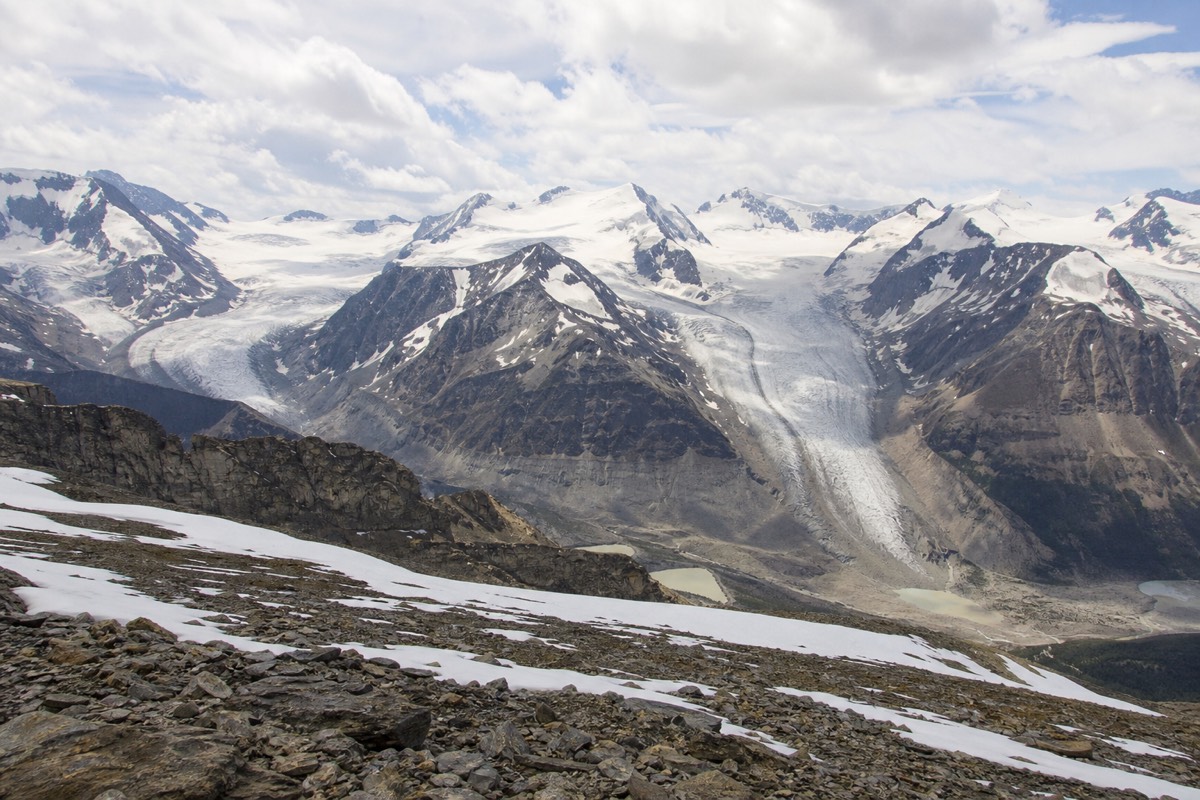
Ask a map for "Columbia Icefield" and it drops a pin on a white blank in the middle of the Rockies, with no settlement attached. That blank is the point. The ice is remote by design, and the single most useful thing to understand before you plan a visit is that everything revolves around one building beside one road. Below is the exact location, the distance from every likely starting point, what the icefield actually is, and the two honest ways to get there.
How far the Columbia Icefield sits from each base
Approximate road distances to the Glacier Discovery Centre and typical drive times before stops. Mountain weather, wildlife on the road and summer traffic all stretch these, so treat them as planning allowances rather than fixed figures.
So where exactly is the Columbia Icefield?
The Columbia Icefield lies on the Continental Divide in the Canadian Rockies, straddling the boundary between Banff and Jasper National Parks in Alberta. Its visitor hub, the Glacier Discovery Centre, sits beside the Icefields Parkway (Highway 93 North) at roughly 2,000 metres, about 105 km south of Jasper and 130 km north of Lake Louise. From the centre you look straight up at the Athabasca Glacier, one tongue of ice reaching down toward the road from a much larger frozen plateau you cannot see from ground level.
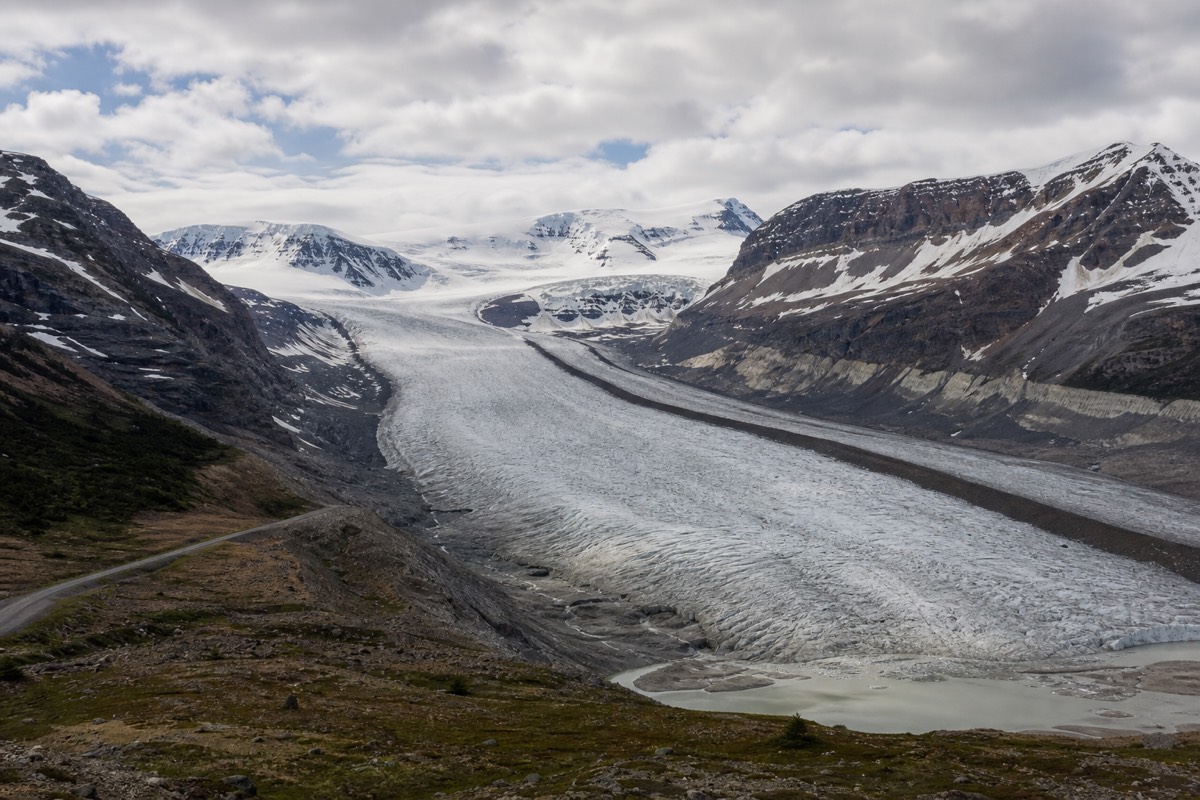
That plateau is the icefield itself, a body of ice covering over 325 square kilometres and feeding eight major glaciers. It sits on the divide that separates water flowing to three different oceans, which is why geographers call it a hydrological apex. The Discovery Centre marks the boundary line: park north of it and you are technically in Jasper National Park, while the ice and the peaks behind it spill across into Banff and along the Alberta and British Columbia border. The whole region is protected as part of a UNESCO World Heritage Site, the Canadian Rocky Mountain Parks, which is one reason the road corridor has stayed so undeveloped.
| Location fact | Detail |
|---|---|
| Visitor hub | Columbia Icefield Glacier Discovery Centre |
| Road | Icefields Parkway, Highway 93 North |
| National parks | On the Banff and Jasper boundary (centre sits in Jasper) |
| Province | Alberta, on the Alberta and British Columbia divide |
| Discovery Centre elevation | Around 2,000 m (about 6,500 ft) |
| Icefield size | Over 325 sq km, feeding eight major glaciers |
| Protected status | Part of the Canadian Rocky Mountain Parks World Heritage Site |
How far is the Columbia Icefield from Banff, Lake Louise, Calgary and Jasper?
Jasper is closest at about 105 km, a drive near 1 hour 15 minutes. Lake Louise sits roughly 130 km south, near 1 hour 45. Banff is about 185 km and close to 2 hours 45, Canmore around 205 km, and Calgary the longest at roughly 290 km, near 3 hours 45 before any stops. Those times assume you drive straight through, which almost nobody does on this road. For the northern approach specifically, here is how far Jasper sits from the Columbia Icefield.
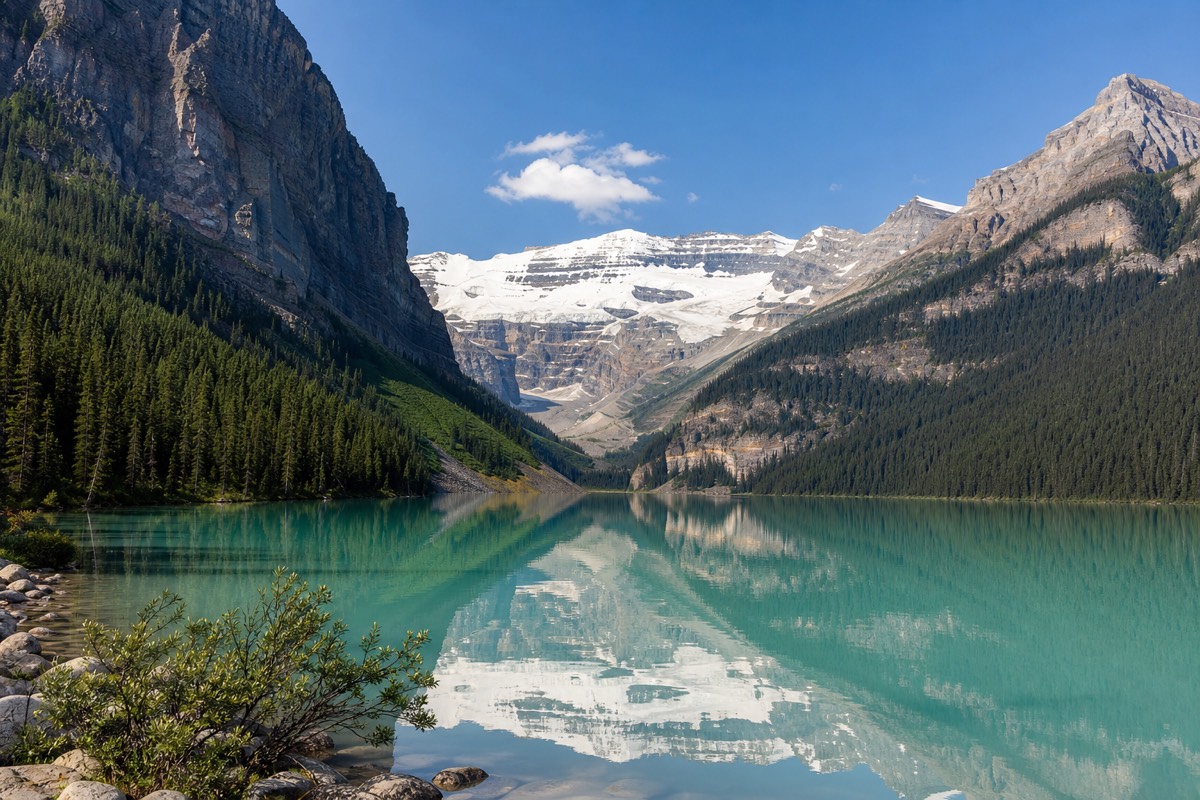
The reason the numbers matter is that the Icefields Parkway is not a road you rush. It is one long chain of viewpoints, and honest planning treats the drive as part of the day rather than a transfer to get over with. Coming from the south, you leave the Trans-Canada Highway near Lake Louise and turn north onto Highway 93. From Jasper you simply head south. If you are weighing a southern base, our breakdown of the drive from Banff covers where the time really goes, and there are guided departures from Calgary, Canmore and Banff if you would rather not add the mileage to your own odometer.
| From | Road distance | Typical drive, no stops | Route |
|---|---|---|---|
| Jasper | ~105 km | 1 hr 15 min | Highway 93 south |
| Lake Louise | ~130 km | 1 hr 45 min | Highway 93 north |
| Banff | ~185 km | 2 hr 45 min | Highway 1 to Highway 93 |
| Canmore | ~205 km | 3 hr 00 min | Highway 1 to Highway 93 |
| Calgary | ~290 km | 3 hr 45 min | Highway 1 to Highway 93 |
What is the Columbia Icefield, and why is it up there?
The Columbia Icefield is a surviving remnant of the last ice age, a high plateau of ice more than 325 square kilometres across and hundreds of metres thick in places. It sits above 3,000 metres on the Continental Divide, which keeps it cold enough to persist, and it feeds meltwater to the Arctic, Pacific and Atlantic oceans. The Athabasca Glacier is the piece you actually meet, because it flows down from the plateau to within a short distance of the road.
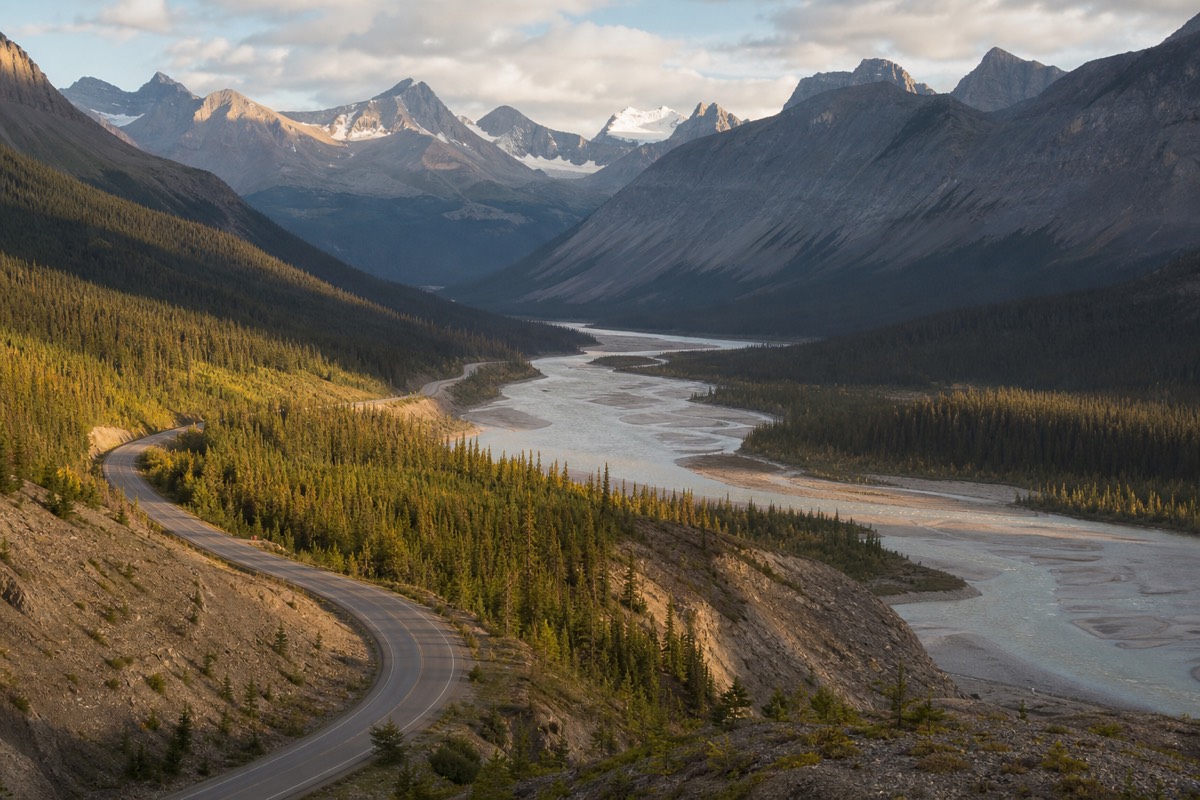
Height is the whole answer to "why here." The icefield sits in a natural catchment ringed by some of the tallest peaks in the range, where snow falls faster than summer can melt it and compresses into glacial ice over centuries. The Athabasca ice you can stand on is around 10,000 years old at depth. That combination of altitude, shade and heavy snowfall is rare this far south, and it is why a stretch of subarctic ice survives at a latitude better known for lakes and forest. To understand the glacier close up, our guide to walking on the Athabasca Glacier covers what the surface is actually like underfoot.
The eight glaciers the icefield feeds include the Athabasca, Dome and Stutfield, which you can pick out from the road, plus larger tongues like the Saskatchewan and Columbia glaciers hidden behind the plateau. All of them are shrinking, the Athabasca visibly so, having pulled back well over a kilometre in the past century and a half. That slow retreat is part of what lends a visit a sense of urgency for many travellers, and the figures behind how old the glacier is and how fast it is now melting are sobering to see up close. The meltwater itself is the other half of the story: because the icefield straddles the divide, its rivers run to the Arctic Ocean by way of the Athabasca, to the Pacific by way of the Columbia, and toward the Atlantic through the North Saskatchewan, one of very few places on the continent where a single patch of ice waters three oceans.
How do you get to the Columbia Icefield by car?
You reach it on the Icefields Parkway, Highway 93, and there is no shortcut. From the south, take the Trans-Canada to Lake Louise, then drive north on Highway 93 for about 130 km. From Jasper, head south for around 105 km. A valid national park pass is required for every vehicle, and there is no fuel near the ice. Fill the tank before you commit to the drive.
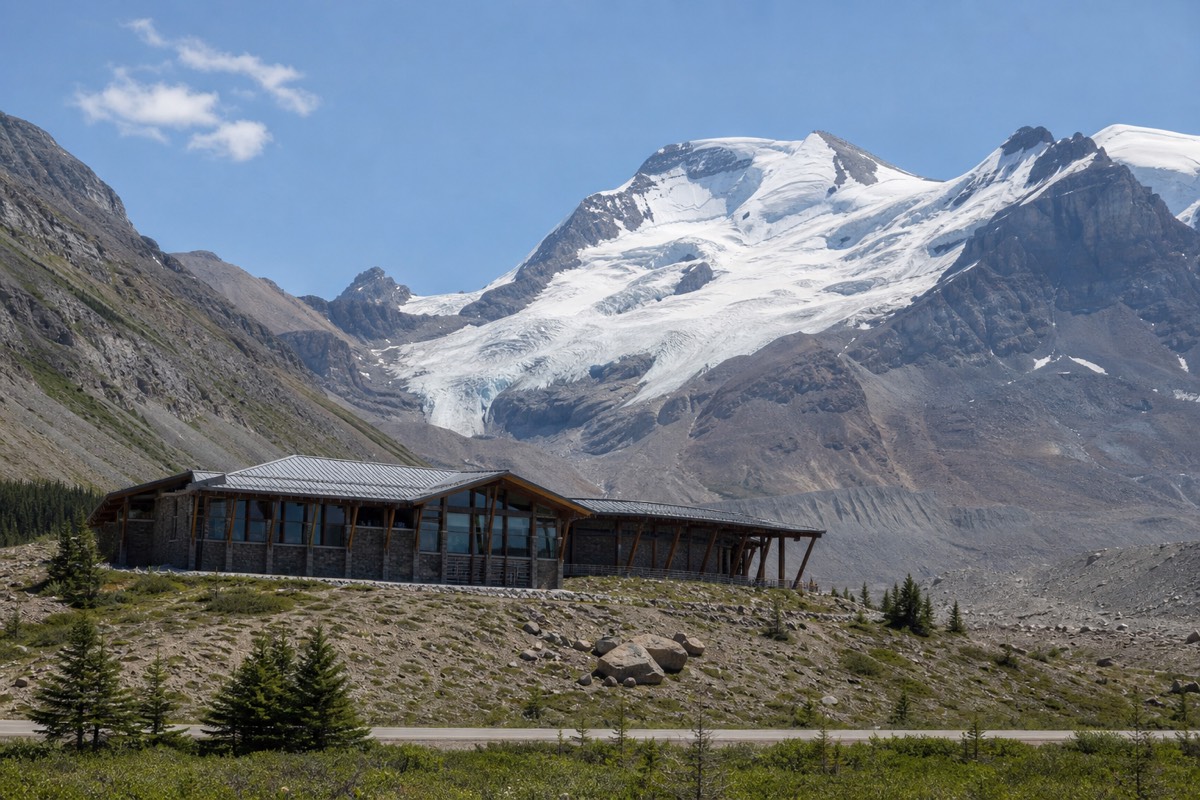
The Discovery Centre has a large free parking lot directly across the road from the Athabasca Glacier, and that lot is your arrival point whether you come to ride the ice or just to look. It fills through the middle of the day in summer, so an early or late arrival buys you both a space and thinner crowds. Every vehicle needs a valid Parks Canada pass, sold as a single day pass or an annual Discovery Pass, and it is checked at the park gates rather than at the ice, so buy it before you set off. The road itself is a highlight rather than a chore, and the full run is worth reading up on before you set out; our Icefields Parkway drive guide maps the stops in order so you know what is coming.
| Way to arrive | Best for | Effort | Rough cost |
|---|---|---|---|
| Self-drive | Flexibility, photography stops, your own pace | High, a long mountain drive with no fuel near the ice | Fuel plus park pass |
| Guided day tour | No driving, live commentary, logistics handled | Low | Around $70 to $105, check the live listing |
| Private tour | A small group at your own tempo | Low | Higher, check the live listing |
| One-way transfer | Ending your trip in Jasper, not doubling back | Low | Around $270, check the live listing |
Can you reach the Columbia Icefield without your own car?
Yes. Guided day tours run from Calgary, Banff, Canmore and Lake Louise, and seasonal shuttles connect Jasper to the ice. There is no public bus that will drop you at the Discovery Centre on request, so without a car a guided trip or a scheduled shuttle is the realistic option. Most visitors without a vehicle choose the day tour, since it bundles the drive, the commentary and the tight timing into one seat.
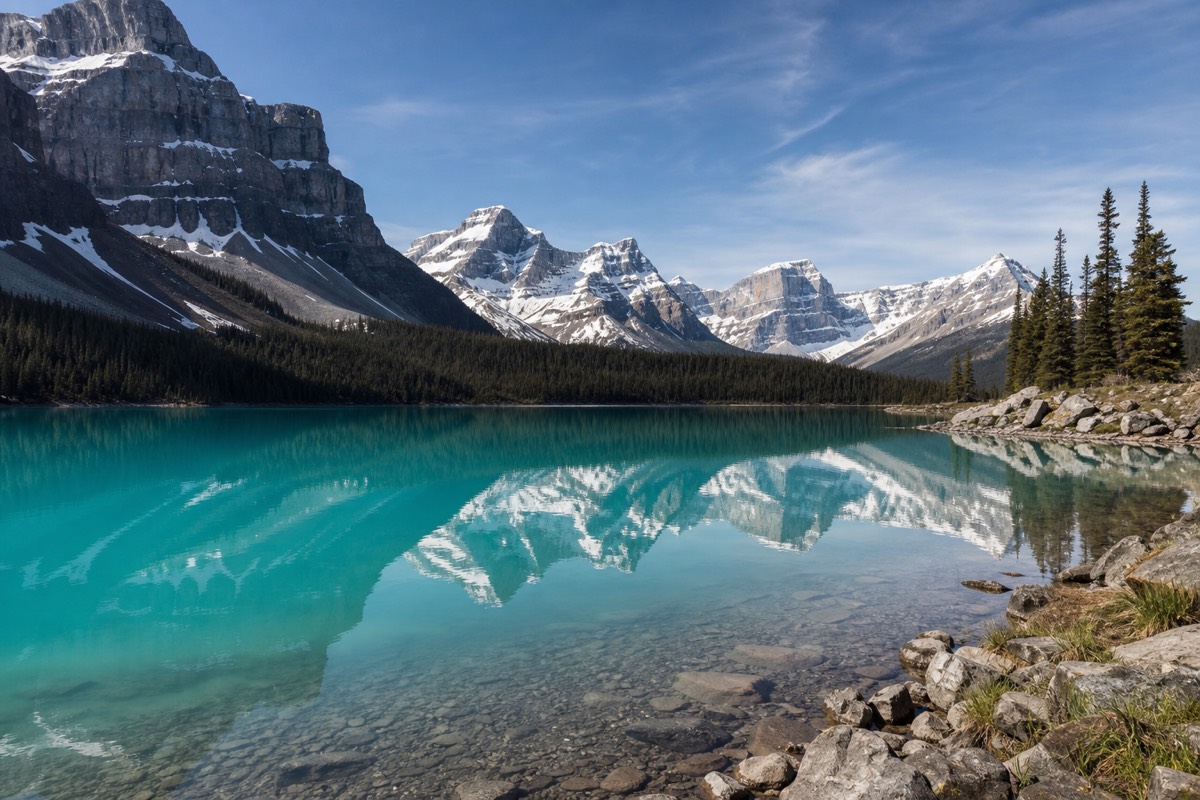
The choice usually comes down to where you are sleeping. From the southern towns, a full-day loop tour is the standard answer, and a glacier day trip from Calgary turns a punishing round drive into a day you can sleep through if you want. From Jasper, the ice is close enough for a half-day. If you are torn between driving yourself and letting someone else handle it, we lay out the trade-offs in plain terms in our look at visiting the icefield without a tour.
Where do you arrive: the Glacier Discovery Centre
Almost every visit begins at the Columbia Icefield Glacier Discovery Centre, a large lodge-style building beside Highway 93 with the Athabasca Glacier framed in its windows. It is the departure point for the Ice Explorer onto the glacier and the shuttle to the Glacier Skywalk, and it holds food, washrooms, a gift shop and seasonal accommodation. If you picture "the Columbia Icefield" as a destination, this is the address.
The centre sits at roughly 2,000 metres, which is high enough that the air feels noticeably thinner and cooler than it did in Banff or Calgary that morning. Staff at the activity desks handle glacier and Skywalk timing, and the upstairs Glacier View Lodge is the only hotel right at the ice. For a full walk-through of the building, the desks and how the ticketing flows, see our Glacier Discovery Centre guide.
| At the Discovery Centre | What you find |
|---|---|
| Glacier Adventure desk | Ice Explorer departures onto the Athabasca Glacier |
| Skywalk shuttle | Bus to the glass-floored Glacier Skywalk over the Sunwapta Valley |
| Food | Cafeteria and dining, seasonal hours |
| Lodging | Glacier View Lodge, upstairs, seasonal |
| Parking | Large free lot, tends to fill through midday in summer |
| Facilities | Washrooms, gift shop, viewpoints toward the glacier |
What can you actually do once you arrive at the Columbia Icefield?
Three experiences draw most visitors. You can ride a giant Ice Explorer onto the Athabasca Glacier and stand on the ice, walk the glass-floored Glacier Skywalk suspended about 280 metres above the Sunwapta Valley, and take in the whole scene from the Discovery Centre or a short trail toward the glacier toe. Longer guided icewalks go deeper for those who want more than a viewpoint.
The Ice Explorer is the signature outing, a purpose-built vehicle with enormous wheels that crawls onto the glacier surface so you can step out onto ice roughly 10,000 years old at depth, and it is the experience most visitors come for. The Skywalk is a separate ticket, a horseshoe of glass cantilevered over the valley, and you reach it by shuttle from the centre; see our guide to the glass-floored Glacier Skywalk for what the walk is really like. You can also follow a short self-guided trail from the parking area toward the glacier toe at no cost, though the ice has retreated well back from where it once reached, and posted markers show just how far. Do not step onto the glacier itself without a guide, since crevasses near the toe are a real hazard.
| Experience | What it is | Roughly how long | Notes |
|---|---|---|---|
| Ice Explorer glacier ride | Vehicle onto the glacier, time out on the ice | ~1 to 1.5 hr | Book ahead in summer |
| Glacier Skywalk | Glass-floored walkway over the Sunwapta Valley | ~30 to 45 min | Shuttle runs from the Discovery Centre |
| Glacier toe trail | Short self-guided walk toward the ice | ~30 to 60 min | Free, do not step onto the ice unguided |
| Guided icewalk | Longer roped walk on the glacier | ~3 to 5 hr | Seasonal, a separate guided operator |
| Discovery Centre | Exhibits, dining and glacier viewpoints | As long as you like | The indoor option in poor weather |
What is the drive to the icefield like, and is it hard?
The Icefields Parkway is fully paved and not technically difficult, but it is a serious mountain road. There is no fuel between Lake Louise and Jasper, patchy or absent cell service, wildlife on the shoulders, and weather that can turn quickly at altitude. The driving is straightforward in good conditions and demands real care in bad ones. None of this should scare a careful driver, but it rewards preparation.
The single biggest practical issue is fuel. Plan to arrive at the icefield with well over half a tank, because the Saskatchewan River Crossing services to the south are seasonal and cannot be relied on. Snow is possible in any month at this elevation, and the season shapes everything, so it is worth checking the best time to visit and the weather before you fix a date. Drive to the conditions, watch for bighorn sheep and bears near the road, and give yourself far more time than the raw distance suggests.
| Service point | Where | Note |
|---|---|---|
| Lake Louise | South end of the Parkway | Last dependable fuel and services from the south |
| Saskatchewan River Crossing | ~50 km south of the ice | Fuel and food, seasonal, do not count on it |
| The icefield | 0 km | Food, water and washrooms, but plan your fuel elsewhere |
| Jasper | ~105 km north | Full services and fuel |
How do you plan a day around getting there?
Budget for the drive twice over. From Lake Louise a satisfying visit runs six to eight hours door to door, from Banff nine to eleven, and from Calgary eleven to thirteen. The time on the ice itself, an Ice Explorer ride plus the Skywalk, is only about two hours, so the length of your day is set almost entirely by how far you drive. That math is why so many visitors either base close or hand off the driving.
A workable Lake Louise plan looks like this: leave by 8am, reach the Discovery Centre around 10, spend two hours split between the glacier and the Skywalk, eat lunch, then drift back south with photo stops at Peyto Lake and Bow Lake, home by late afternoon. From farther away the pattern holds but the driving swallows the margins. If a full day of mountain driving is not how you want to spend a holiday, the guided route booked through Columbia Icefield Tours hands the wheel, the timing and the tickets to someone else, and a Banff day tour with the Skywalk is the version most first-time visitors from the south end up choosing.
| From | Drive each way | Time on the ice | Realistic round-trip day |
|---|---|---|---|
| Jasper | ~1 hr 15 min | ~2 hr | 5 to 6 hr |
| Lake Louise | ~1 hr 45 min | ~2 hr | 6 to 8 hr |
| Banff | ~2 hr 45 min | ~2 hr | 9 to 11 hr |
| Calgary | ~3 hr 45 min | ~2 hr | 11 to 13 hr |