Columbia Icefield from Banff: Distance, Drive & Day Tours
Banff is the easiest base for the Columbia Icefield, and the drive between them is not a chore to endure but the best part of the trip. It runs about 185 km north up the Icefields Parkway, past hanging glaciers and turquoise lakes, to the largest sheet of ice south of the Arctic Circle. This guide gives you the real distance and drive time, the stops that break the journey, the day tours that handle it for you, and what the day actually costs.
Make the long approach part of a guided sightseeing day from Banff. Explore The Banff Glacier Day
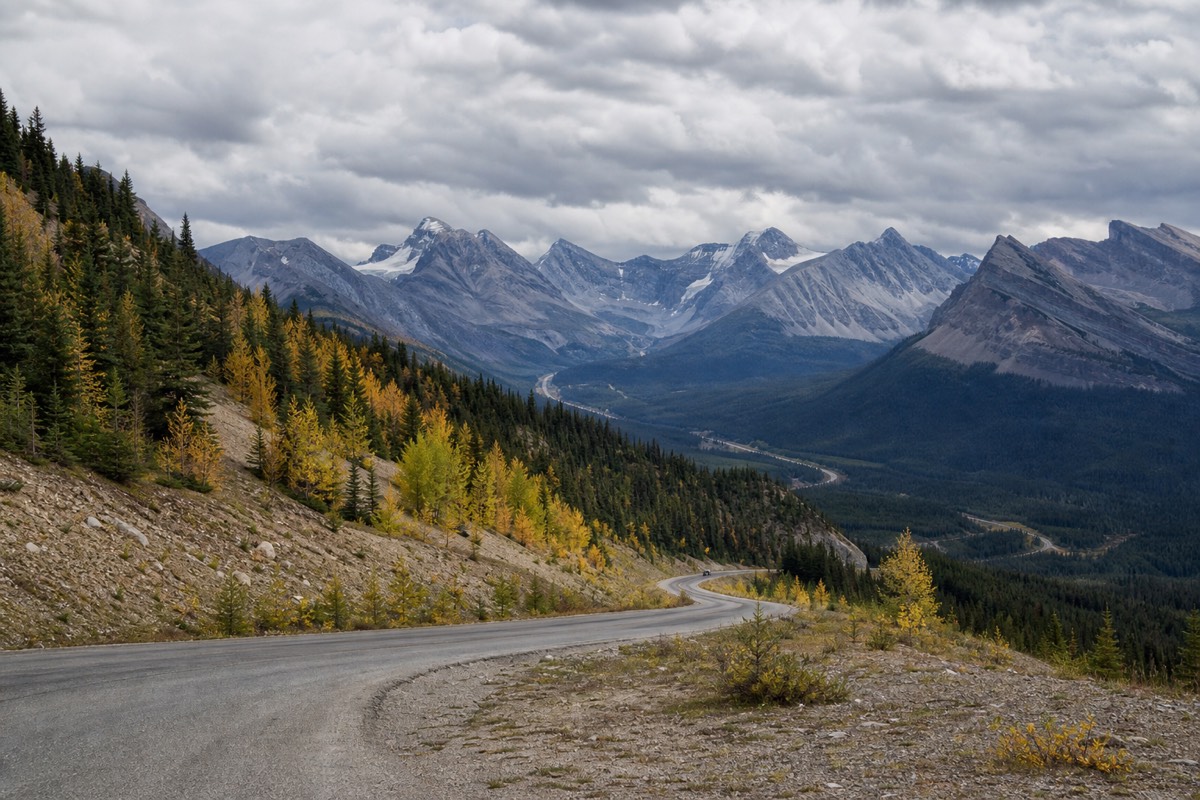
Most people who see the Columbia Icefield see it from Banff, and there is a good reason for that. The town sits at the southern gateway to the Icefields Parkway, so the whole route north is one long scenic build-up to the ice. It is farther than it looks on a map, though, and the drive rewards a plan. Here is the distance, the timing, the stops and the tours, laid out so you can decide how to spend the day.
Distance to the Columbia Icefield from Banff, Lake Louise and Jasper
Approximate road distances and driving times along the Icefields Parkway (Highway 93N), before any scenic stops. Banff is the longest of the three common bases. Figures compiled from the site's route notes and Parkway travel information.
How far is the Columbia Icefield from Banff?
The Columbia Icefield is about 185 km (115 miles) north of Banff, a drive of roughly two and a half to three hours without stops. The route follows Highway 1 to Lake Louise, then the Icefields Parkway (Highway 93N) all the way to the Glacier Discovery Centre.
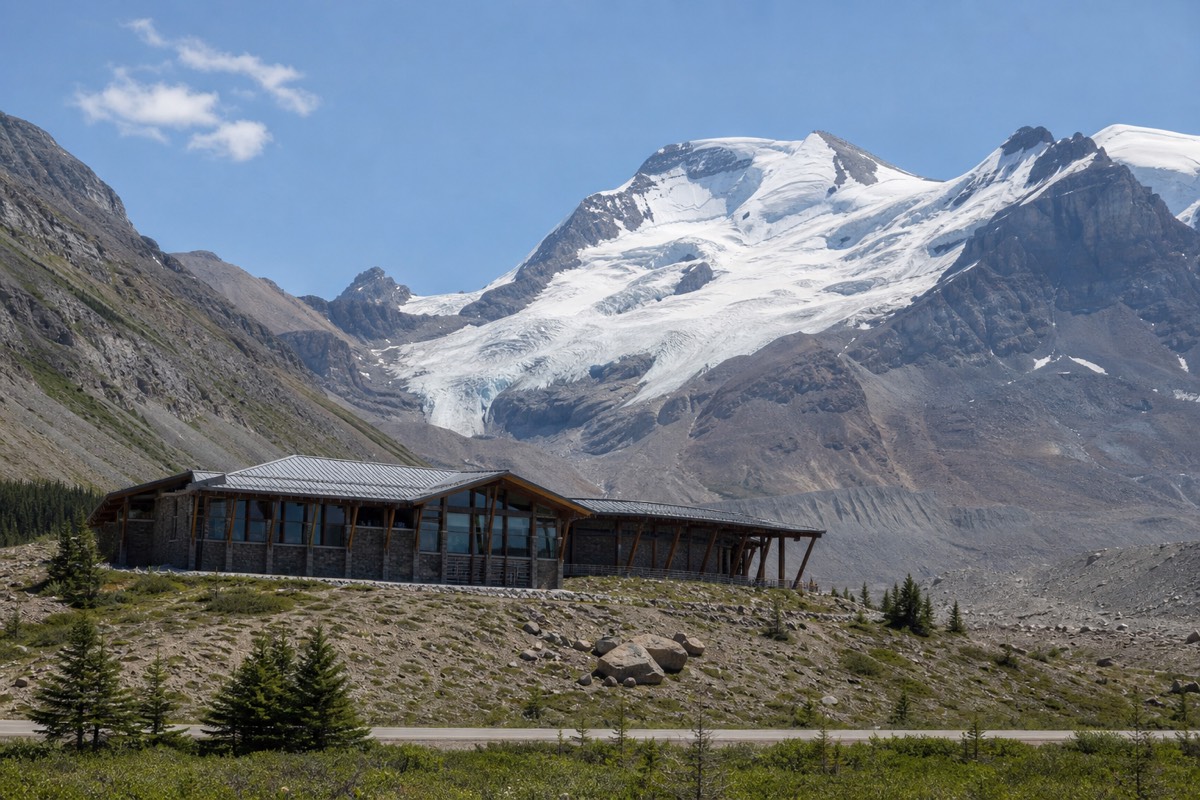
That figure catches people out, because Banff feels close to everything in the Rockies and the icefield is genuinely far up the range. It is the longest of the three usual bases, farther than Lake Louise and much farther than Jasper. The comparison is worth seeing plainly before you pick where to start your day.
| From | Distance | Driving time (no stops) |
|---|---|---|
| Jasper | ~103 km (64 mi) | ~1 hr 15 min |
| Lake Louise | ~130 km (80 mi) | ~1 hr 45 min |
| Banff | ~185 km (115 mi) | ~2.5 to 3 hr |
If you are staying in Banff and want to cut the drive, an overnight in Lake Louise shaves nearly an hour off each direction. And if you would rather someone else handle the distance entirely, plenty of visitors let a day tour do the driving; the details of the drive from Banff get their own honest breakdown.
How long does the drive from Banff to the Columbia Icefield really take?
Plan for five to six hours each way, not three. The pure driving time is about two and a half to three hours, but the Icefields Parkway is wall-to-wall viewpoints, and no one drives it without stopping at Bow Lake, Peyto Lake and a few glaciers along the route.
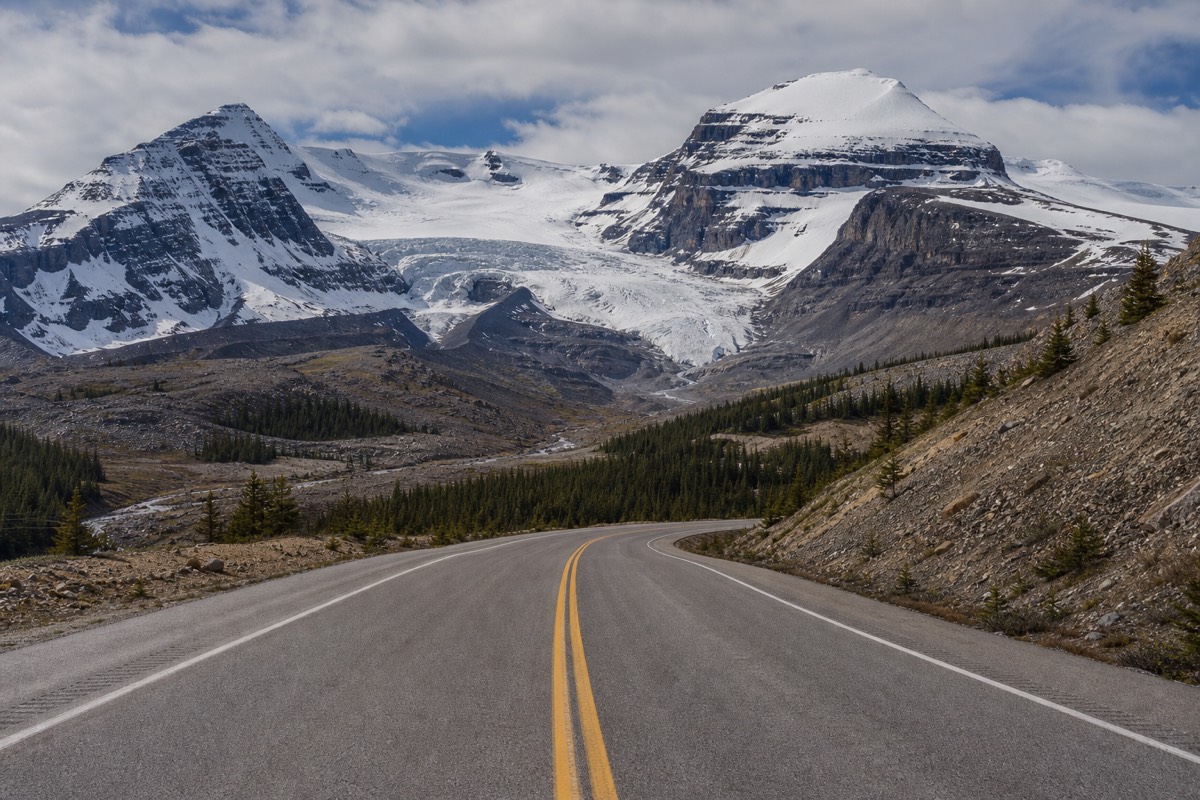
The gap between the map time and the real time is the whole character of this drive. Treat it as a two-hour transit and you will spend the day frustrated, watching everyone else pull over. Treat it as a full day with a glacier in the middle and it becomes one of the best outings in Canada. Guided tours build the stops into a tight schedule so nothing runs late; self-drivers should give themselves the same generosity. The other reason to pad the clock is the road itself, which climbs and winds through the high country and is best driven unhurried.
What does a day from Banff look like, hour by hour?
A guided day from Banff usually starts with a hotel pickup around 7:30am, pauses at Lake Louise, works north up the Parkway with photo stops, reaches the Columbia Icefield around midday for the Ice Explorer and Skywalk, then returns south to Banff in the early evening. The exact clock varies by operator.
Laying the day out shows why it runs long: the driving sits at both ends and the glacier fills the middle. Self-drivers can follow the same rhythm at their own pace. The sample schedule below is illustrative, drawn from how the guided days tend to flow, so read the times as a pattern rather than a promise.
| Approx time | Where you are |
|---|---|
| 7:30 am | Hotel pickup in Banff or Lake Louise |
| 8:15 am | Lake Louise, turquoise water before the crowds |
| 9:00 am | Crowfoot Glacier viewpoint |
| 9:30 am | Bow Lake, short walk to the shore |
| 10:15 am | Peyto Lake overlook |
| 11:45 am | Arrive Columbia Icefield Glacier Discovery Centre |
| 12:00 pm | Ice Explorer onto the Athabasca Glacier |
| 1:45 pm | Lunch at the Discovery Centre |
| 2:45 pm | Glacier Skywalk, 280 m above the Sunwapta Valley |
| 3:30 pm | Athabasca Falls, short walk to the canyon |
| 7:00 pm | Hotel drop-off in Banff |
What are the stops between Banff and the Columbia Icefield?
Heading north from Banff you pass Lake Louise, then a run of Parkway highlights: Herbert Lake, the Crowfoot Glacier viewpoint, Bow Lake, the Peyto Lake overlook, the Waterfowl Lakes, Mistaya Canyon and Saskatchewan River Crossing, before the final climb to the icefield.
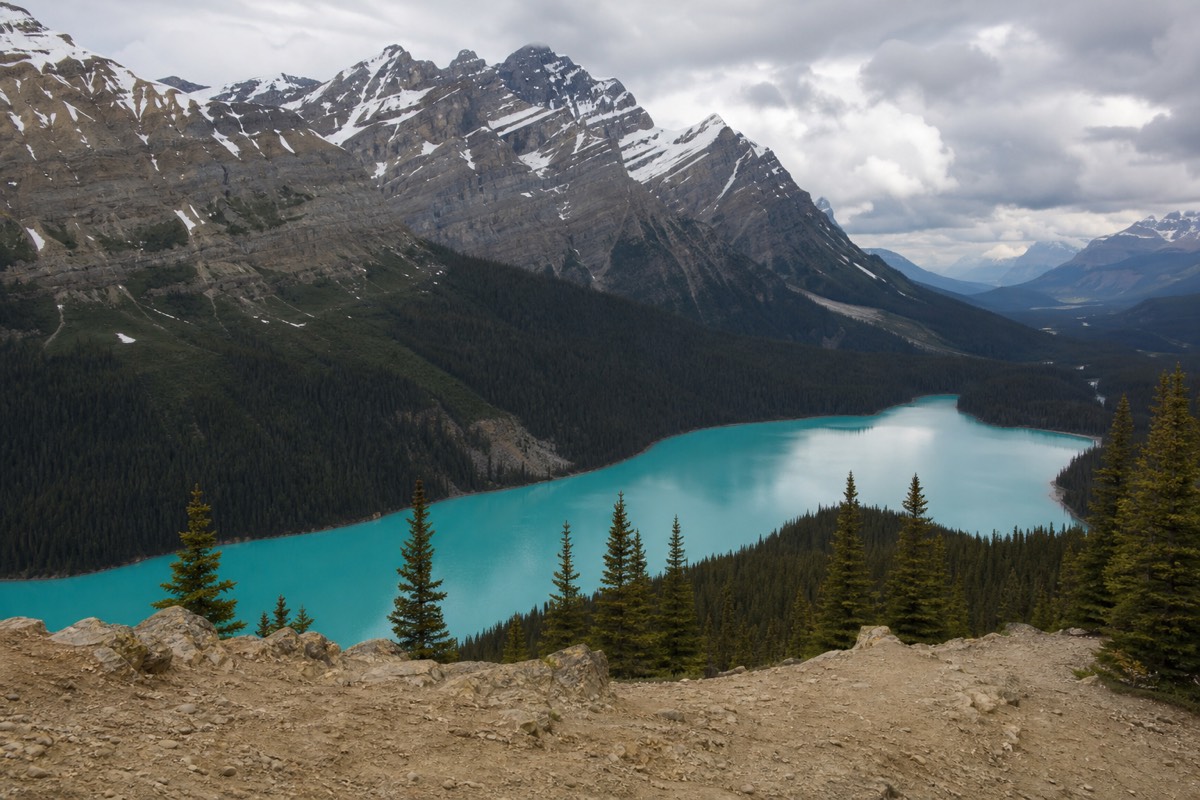
These stops are not detours, they are strung along the road in order, most of them a few minutes' walk from a pullout. Peyto Lake is the headline, a wolf-shaped sheet of unreal turquoise seen from a viewpoint above the tree line. Bow Lake sits lower and calmer, often mirror-still in the morning. Saskatchewan River Crossing matters for a practical reason as well as a scenic one: it holds the only fuel station on the entire route. The table lists the stops south to north so you can pace the drive.
| Stop (south to north) | What it is | Typical time |
|---|---|---|
| Lake Louise | Turquoise lake, Parkway gateway | 20 to 40 min |
| Herbert Lake | Quiet reflection lake | 10 min |
| Crowfoot Glacier viewpoint | Hanging glacier above the valley | 10 min |
| Bow Lake | Broad, often mirror-still lake | 15 to 30 min |
| Peyto Lake overlook | Wolf-shaped turquoise lake | 20 to 30 min |
| Waterfowl Lakes | Calm, less-crowded lakes | 10 to 15 min |
| Mistaya Canyon | Short walk to a carved gorge | 20 min |
| Saskatchewan River Crossing | The only fuel and food midway | as needed |
For the stop-by-stop version with a bit more detail on each, our full guide to what to see along the Icefields Parkway runs the whole route in order.
Is the drive from Banff to the Icefield hard or scary?
For most drivers it is straightforward in summer: a paved, well-graded two-lane highway with wide views. It climbs and winds in places, there is little to no cell service, and the only fuel is at Saskatchewan River Crossing, so the caution is about preparation rather than danger.
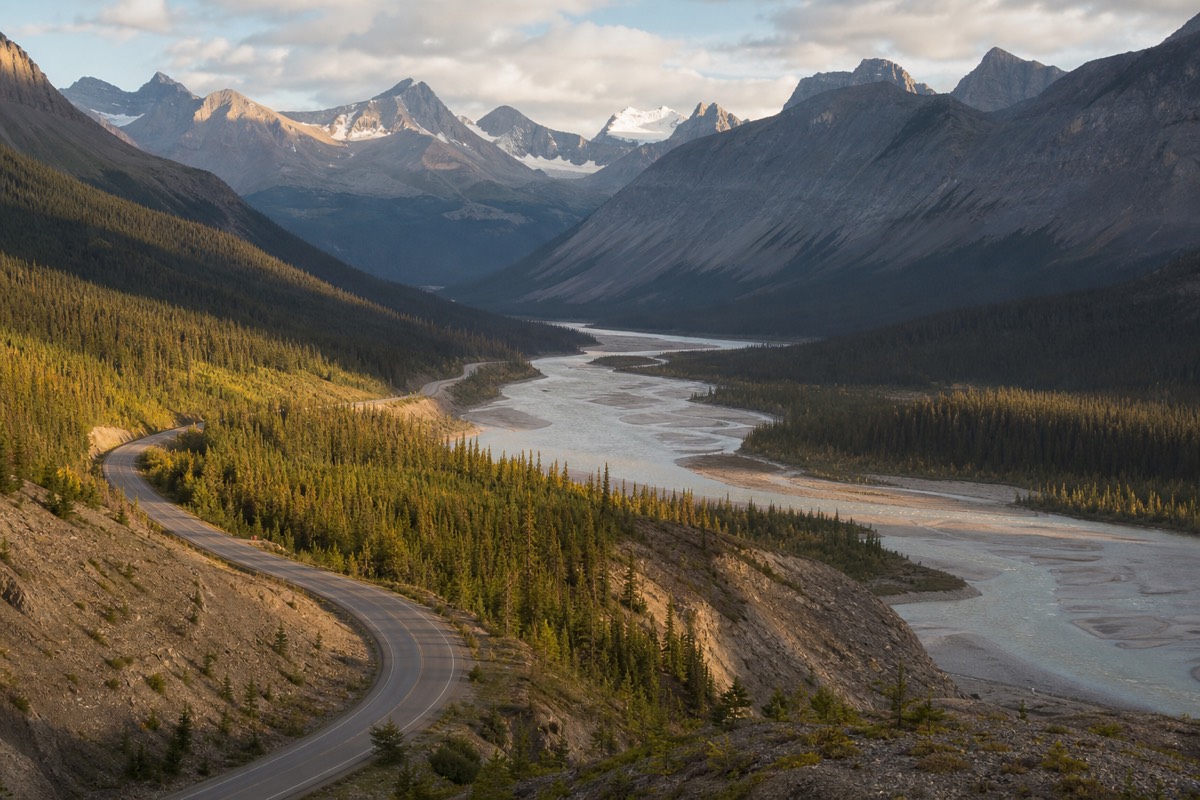
The Icefields Parkway is not a white-knuckle road. It is a proper mountain highway, with a few long grades and curves near the icefield, but nothing that demands special skill in good weather. What catches people out is the isolation, not the driving: no signal for most of the route, one fuel stop, and weather that can turn to snow flurries even in summer up high. Fill the tank before you leave, download offline maps, and keep an eye on the sky. If the idea of the road still worries you, our honest answer to whether the mountain road feels scary talks it through, and it is one more reason many people simply book a seat and let a local drive.
What happens when you reach the Columbia Icefield?
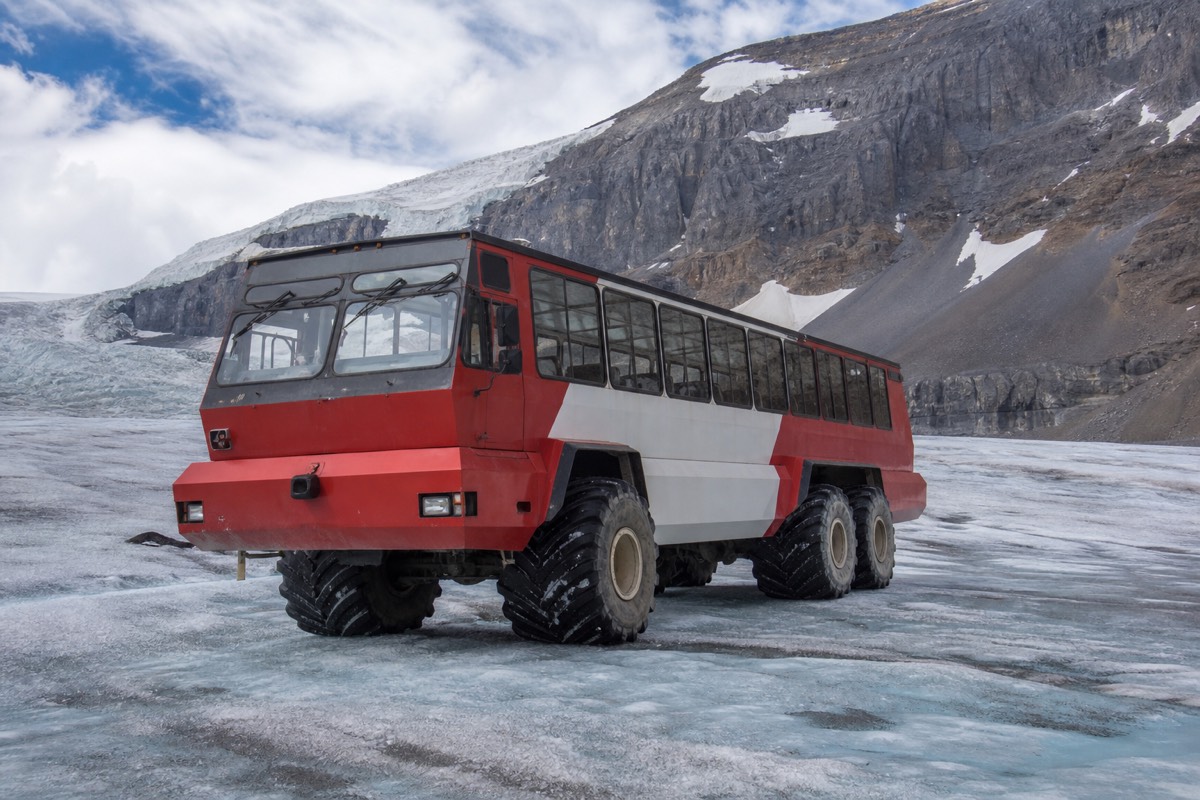
At the icefield you can ride the Ice Explorer, a giant six-wheeled bus, onto the surface of the Athabasca Glacier to walk on the ice, and step onto the Glacier Skywalk, a glass-floored platform suspended 280 metres above the Sunwapta Valley. Both start from the Glacier Discovery Centre beside the highway.
The Ice Explorer is the centrepiece, a massive purpose-built bus with tires taller than most adults. It carries you down onto the glacier, where you have around twenty minutes to walk a marked stretch of glacier ice and, conditions permitting, look at the meltwater channels. On the way down you pass markers showing where the ice reached in 1890, 1920, 1950 and later, a plain record of a glacier in retreat. The Columbia Icefield feeds eight major glaciers and sits near 1,900 metres, so it stays cold up here even in midsummer. The Skywalk is a quieter, shorter stop reached by shuttle, more about the drop and the valley than thrills. Everything runs out of the Glacier Discovery Centre hub, which also holds the ticket desks, cafe and washrooms. If you want the detail on the glacier walk before you go, our guide to walking on the Athabasca Glacier covers what the ice is like underfoot.
Which Banff-departure day tour should you choose?
Three of the tours we list pick up in Banff, ranging from a value coach day to a small-group departure capped at 14. All follow the same Parkway route to the icefield; they differ mainly on price, group size and how much of the day is guided commentary.
If you want the reassurance of a proven option, the most-booked of the three has carried thousands of guests up this road. If you would rather trade a little money for a smaller group and a more personal pace, the capped departure is the pick. Here is the side-by-side.
| Tour | Style | Duration | From (per person) | Best for |
|---|---|---|---|---|
| Banff: Columbia Icefield, Skywalk & Glacier Lakes | Full day tour | ~11 hours | around $70 | Value from Banff |
| Columbia Icefield Adventure: Skywalk, Crowfoot & Lakes | Popular coach tour | ~12 hours | around $95 | The most-booked pick |
| Glacier Lakes departures (Calgary, Canmore or Banff) | Small-group, up to 14 | ~11 hours | around $102 | A more personal pace |
Prices are starting points and change with the season, so check the live listing for the current figure. The value option is the Banff day tour with the Skywalk and glacier lakes. For the proven all-rounder, the most-booked Icefield and Skywalk day tour is hard to beat, and travellers who want fewer fellow passengers lean toward a small-group departure from Banff.
How much does a Columbia Icefield trip from Banff cost?
A guided seat from Banff starts around $70 to $102 per person, and the Ice Explorer plus Skywalk ticket adds roughly CA$125 on top. Self-driving is cheaper on paper, needing only fuel, a park pass and the attraction ticket, but you take on the driving and the day's logistics.
As with the Calgary trip, the attraction ticket is often the biggest single cost, not the transport. If you only want the viewpoints and the scenery, you can do the day for the price of fuel and a park pass. The moment you want to ride onto the ice, the ticket becomes the headline number. The rough breakdown looks like this.
| Cost item | Rough amount | Notes |
|---|---|---|
| Guided tour seat from Banff | around $70 to $102 | Transport, guide and park entry |
| Ice Explorer + Skywalk ticket | around CA$125 | Optional, the main draw |
| National park pass (self-drive only) | a daily per-person fee | Included on guided tours |
| Fuel (self-drive) | fill up before Lake Louise | Only one pump en route |
Every figure moves with the season and the operator, so treat it as a budget guide and read the current price on the live listing. For the running comparison across options, see our page on ticket prices.
Should you drive from Banff or take a guided tour?
Self-drive for flexibility and a lower cash cost; take a tour to skip roughly 370 km of round-trip driving, have the park pass and timing handled, and spend the whole route looking out instead of at the road. Both reach the same glacier.
The decision usually comes down to how you feel about the driving. A self-drive lets you linger at Peyto Lake for an hour or leave at first light, which is gold for photographers. But someone has to drive a long mountain highway with no signal, out and back in a day, and be fresh for the return. A guided tour trades that effort for a set schedule and a local who knows where the light falls. The table sums it up.
| Factor | Self-drive from Banff | Guided tour |
|---|---|---|
| Cost | Lower cash cost | Higher, but bundled |
| Flexibility | Stop wherever you like | Set itinerary |
| Driving | ~370 km round trip, yours | None |
| Park pass and parking | You arrange | Handled |
| Local knowledge | None | Guide throughout |
Can you combine the Icefield with Lake Louise from Banff?
Yes, and it is one of the most popular Rockies day plans. Lake Louise sits directly on the way, at the southern entrance to the Parkway, so it slots in as a first stop if you start early enough to beat the parking crush there.
The trick is timing. Lake Louise fills its car parks by mid-morning in summer, so reaching it early, then heading north for an afternoon glacier slot, is the schedule that works. Many guided tours from Banff already string the two together, pausing at Lake Louise before the run up to the ice. If you are self-driving, aim to be at the lake not long after sunrise, enjoy it, and be back on the Parkway by mid-morning. Where you sleep the night before shapes all of this, which is why our guide to where to stay near the ice is worth a look if you want the quietest possible start.
Day trip or overnight: which works better from Banff?
A day trip is the standard and it works well, but staying a night changes the experience. An overnight in Lake Louise cuts the drive, and a night at the Glacier View Lodge right by the ice unlocks the quietest hours, when the coaches have gone and the dark skies open up for stargazing.
Most Banff visitors do the icefield as a single long day, which is efficient and needs no extra booking. The case for an overnight is quality over convenience. Sleep in Lake Louise and you shave nearly an hour off each leg and can be on the glacier before the crowds; sleep at the lodge by the icefield and you get sunrise and sunset over the ice with almost no one around. Neither is necessary, and both cost more, but for photographers and anyone who wants the ice to feel remote rather than busy, a night nearby is the upgrade. If that appeals, weigh the options in our guide to where to stay before you lock in a Banff-only plan.
What should you know before you leave Banff?
Three things save the day: fill your tank in Banff or Lake Louise because the only fuel is at Saskatchewan River Crossing, download offline maps because there is almost no cell service, and pack warm layers because the glacier can be near freezing even in summer.
| Before you leave Banff | Why it matters |
|---|---|
| Fill the fuel tank | The only pump north is at Saskatchewan River Crossing, at a premium |
| Download offline maps | Almost no cell service on the Parkway |
| Carry a valid park pass | Required to stop anywhere in the parks |
| Pack layers, hat and gloves | The glacier can sit near freezing in July |
| Bring sunglasses and sunscreen | Fierce glare and strong UV off the ice |
| Start early | Beat the midday coaches and the Lake Louise parking rush |
Beyond that, carry a valid park pass on the dashboard, bring sunglasses and sunscreen for the glare off the ice, and start earlier than feels necessary. The best light and the thinnest crowds are in the early morning and late afternoon, before and after the midday coaches, a pattern our guide to the best time to visit spells out. However you travel, our team at Columbia Icefield Tours lists the Banff departures that take the planning off your plate. For current road and park conditions, check Parks Canada; the live ticket prices for the ice sit with the Banff Jasper Collection, and wider regional planning is kept up to date by Travel Alberta.