Can You Walk on the Columbia Icefield?
It is the question almost everyone asks before they book: can you actually set foot on the ice? The short answer is yes, on one specific glacier, and only the safe way.
Look closely at the Athabasca Glacier’s surface features on a guided walk with microspikes. Explore The Guided Glacier Hike
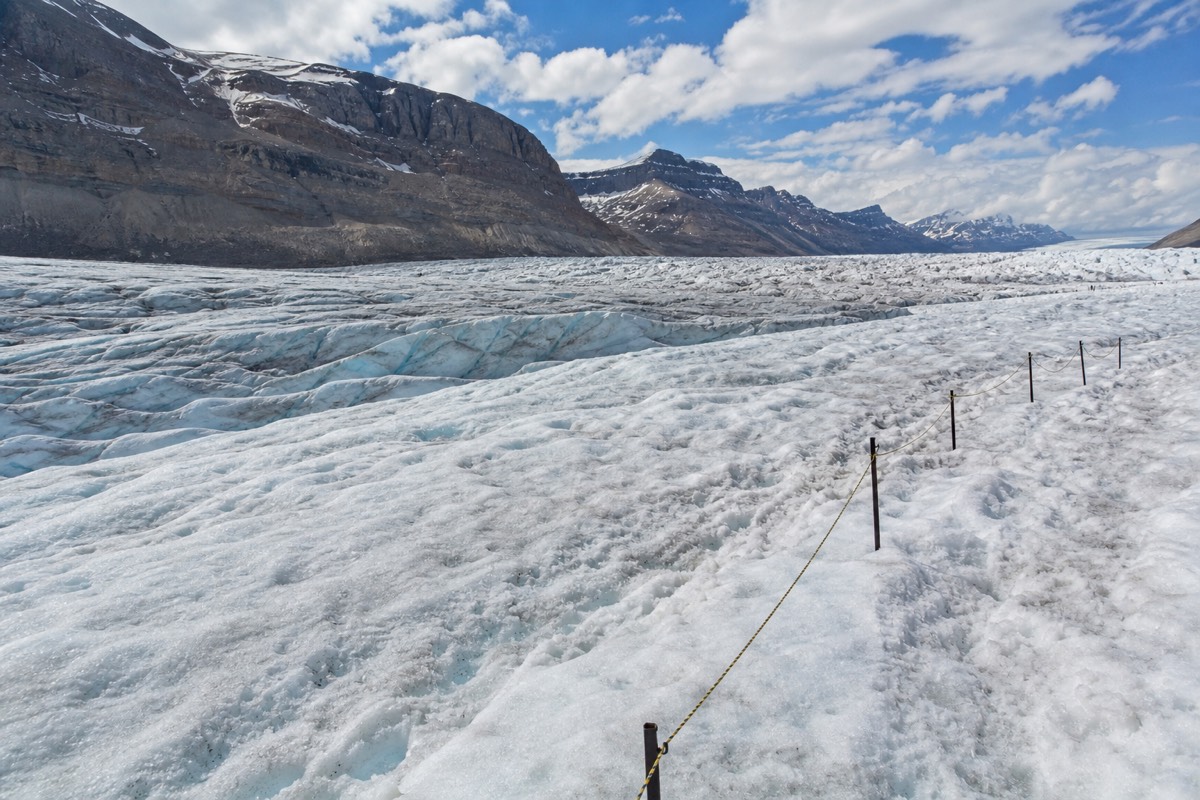
Yes, you can walk on the Columbia Icefield, and thousands of visitors do it every summer. The ice you actually stand on is the Athabasca Glacier, a long tongue that flows down from the icefield toward the highway. The safe way onto it is with a guide or the Ice Explorer, which sets you down on a checked, roped-off patch of glacier.
So what exactly are you walking on?
You walk on the Athabasca Glacier, one of eight glaciers that spill out of the Columbia Icefield. The icefield itself is a vast, high sheet of ancient ice covering more than 325 square kilometres, and most of it is off-limits. The Athabasca is the arm that reaches down near the road, which is why it is the part people can reach.
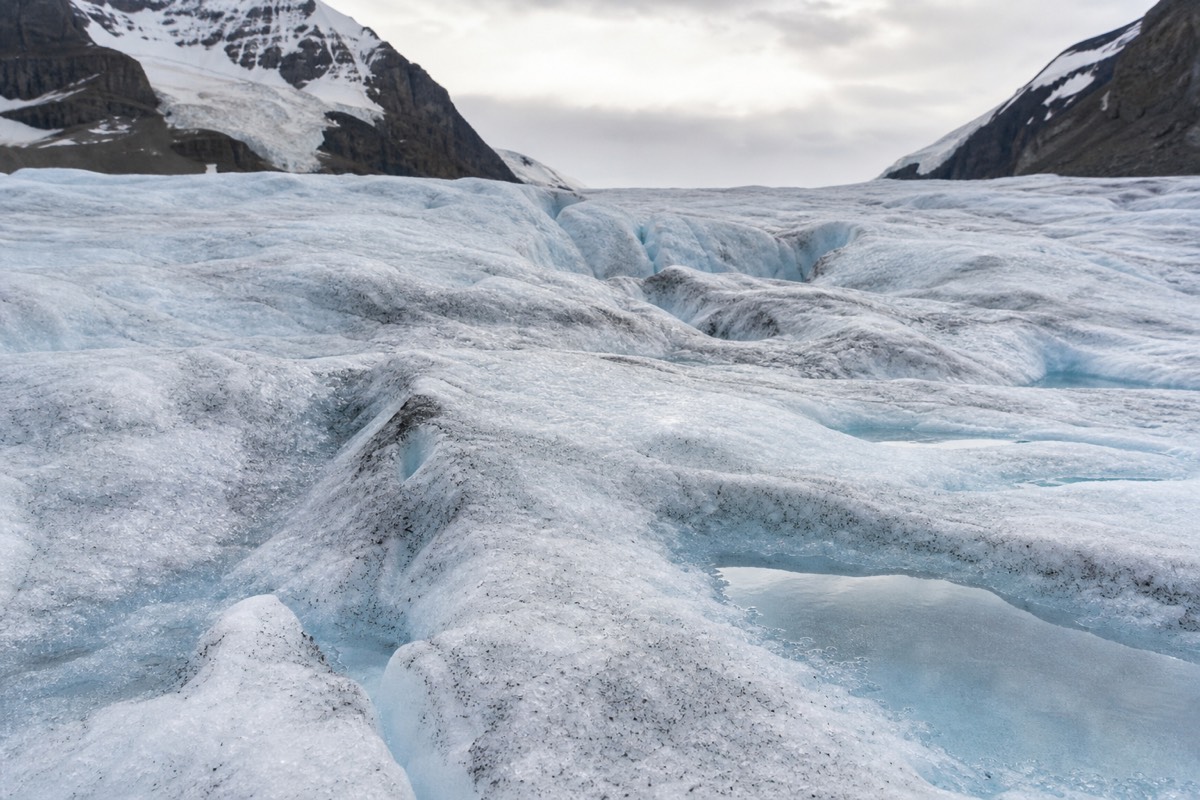
The distinction matters. The Columbia Icefield is the source, sitting high on the Continental Divide where snow piles up faster than it melts. It straddles the Canadian Rocky Mountain Parks World Heritage Site. The Athabasca Glacier is one of its outflows, and the ice you crunch across is roughly 10,000 years old. Standing on it, ringed by peaks, is the moment most people come for.
Why you can't just wander onto the ice alone
Walking out onto the glacier on your own is genuinely dangerous, and it is not permitted. The surface hides deep crevasses, often bridged by thin snow that looks solid and is not. People have died here doing exactly that. Every safe walk keeps you inside an area that guides check and mark each day.
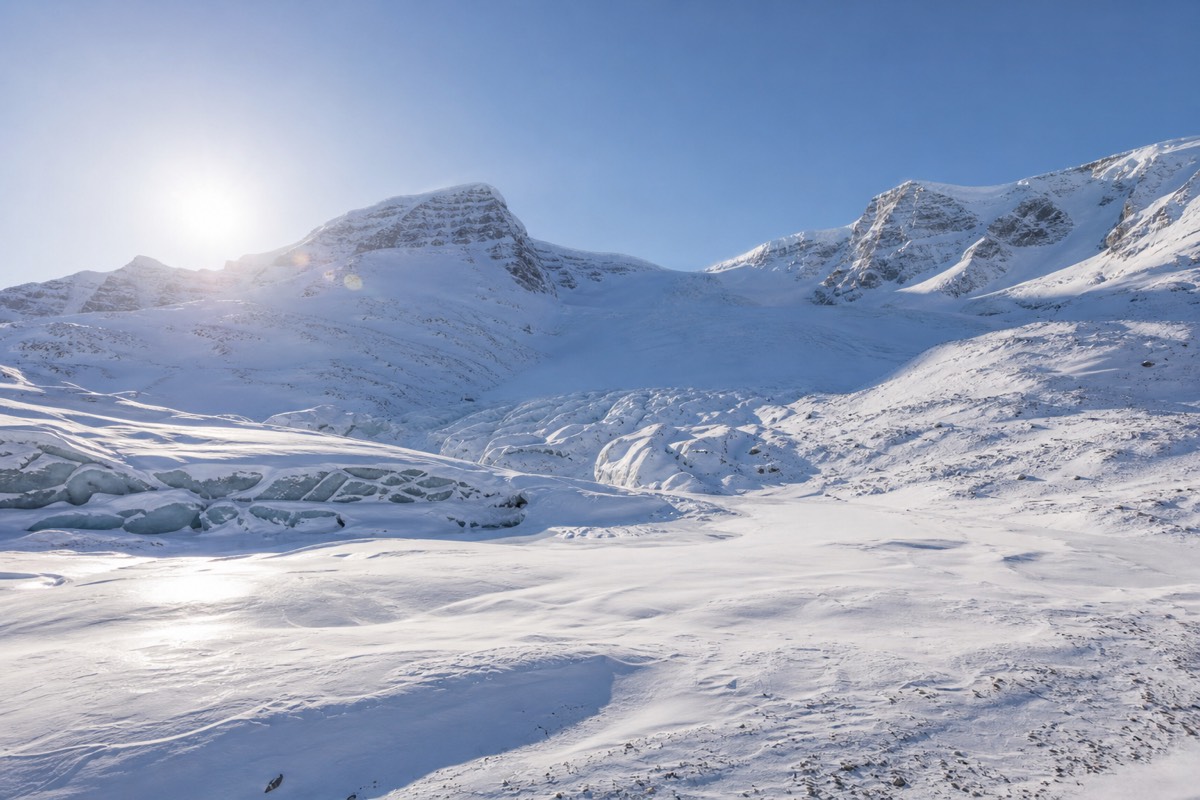
The glacier looks like a smooth white slope from the parking area, and that is the trap. Meltwater carves channels and splits the ice, and a fresh dusting of snow can hide a drop deep enough to fall into and not climb out of. Parks Canada and the operators are clear on this: the toe of the glacier is roped off for a reason, and the only sanctioned way onto the ice is with a guided group.
The two ways to walk on the Athabasca Glacier
There are two sanctioned ways onto the ice. The Ice Explorer is a giant all-terrain bus that carries you up and gives you about 20 minutes on a groomed area. A guided ice walk is a three-to-six-hour hike in crampons that goes much farther onto the glacier. The first suits almost everyone; the second suits able hikers.
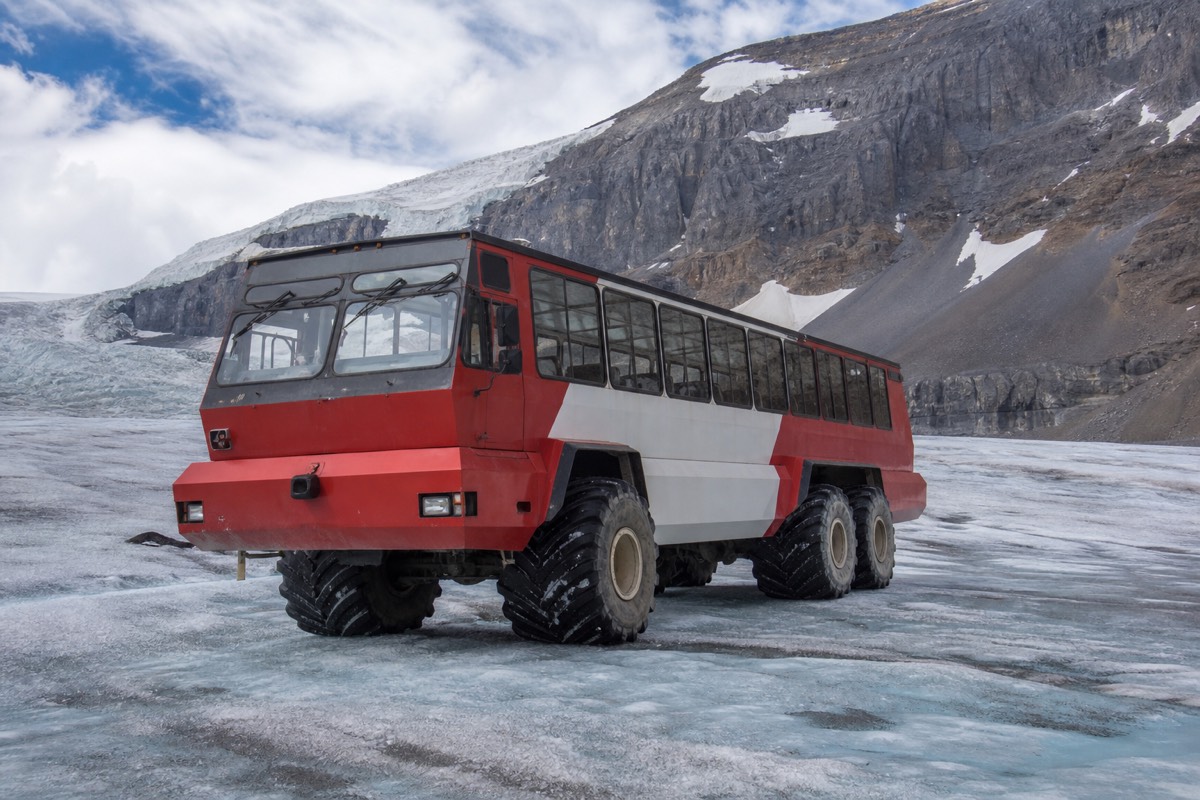
Most day tours use the Ice Explorer, run by the Banff Jasper Collection from the Discovery Centre. It is the family-friendly option: you stay on a flat, marked pad, take photos, and look at the meltwater channels. A guided ice walk is a different animal, roped up and led across the living glacier, and it rewards you with distance, quiet, and features you never see from the pad.
| Way onto the ice | Time on the glacier | Effort | Best for |
|---|---|---|---|
| Ice Explorer stop | About 20 minutes on a marked area | Easy, no special gear | Families, first-timers, most day tours |
| Guided ice walk | Two to four hours further out | Moderate hike in crampons | Steady walkers wanting the real thing |
| Glacier Skywalk | Beside the ice, not on it | Easy, glass walkway | Views without stepping on the glacier |
What the walk feels like, and what to wear
Even in July the glacier surface hovers near freezing, and a wind usually runs down off the ice. Wear real layers, closed-toe shoes with grip, and sunglasses against the glare, and bring a bottle for the meltwater. People who show up in shorts and sandals regret it within minutes.
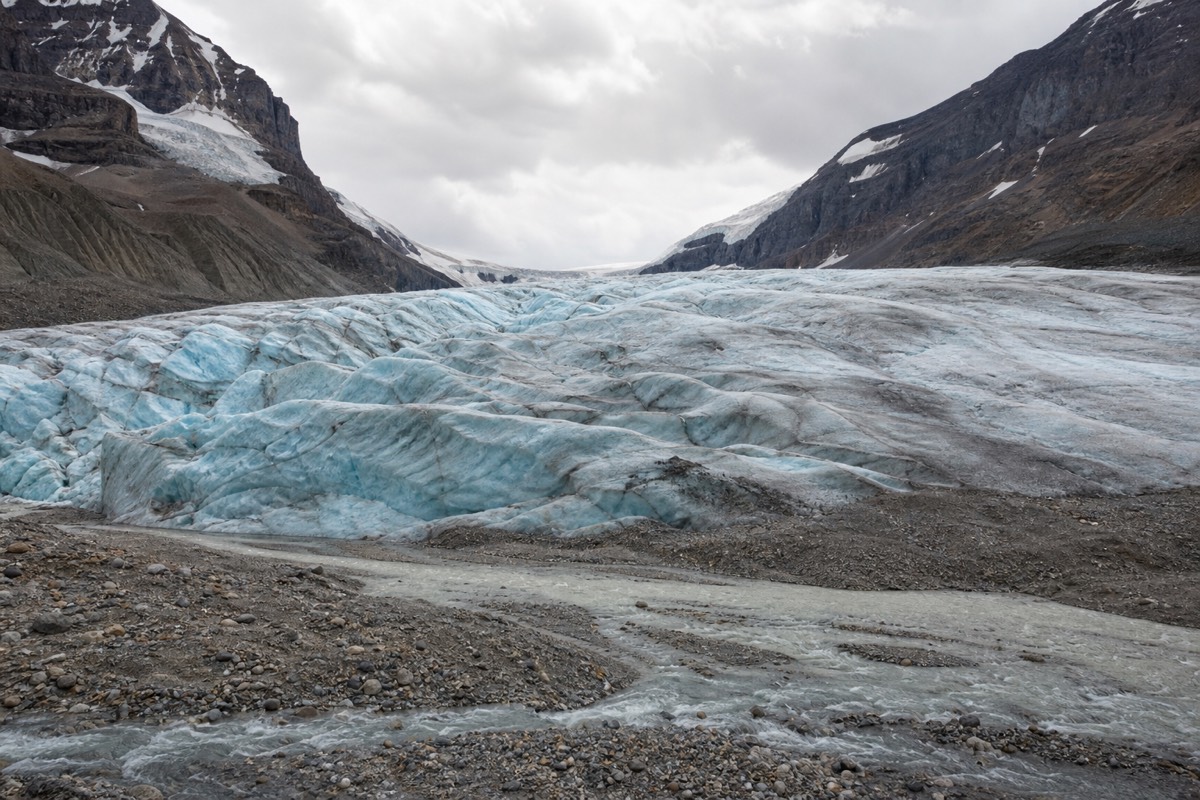
The ice is colder than the car park by a wide margin, and the surface is wet, uneven and slick. Grippy footwear is the difference between an easy stroll and a nervous shuffle. Sun bounces hard off white ice, so glasses and sunscreen matter more than the mild valley air suggests. For a full rundown, see what to wear out on the ice.
Can you walk near the glacier without going on it?
Yes. You can hike the Wilcox Pass trail for a high view over the whole glacier, walk the short path toward the roped toe, or step out on the glass-floored Glacier Skywalk suspended above the Sunwapta Valley. None of these puts you on the ice, but all of them get you close for free or for a modest ticket.
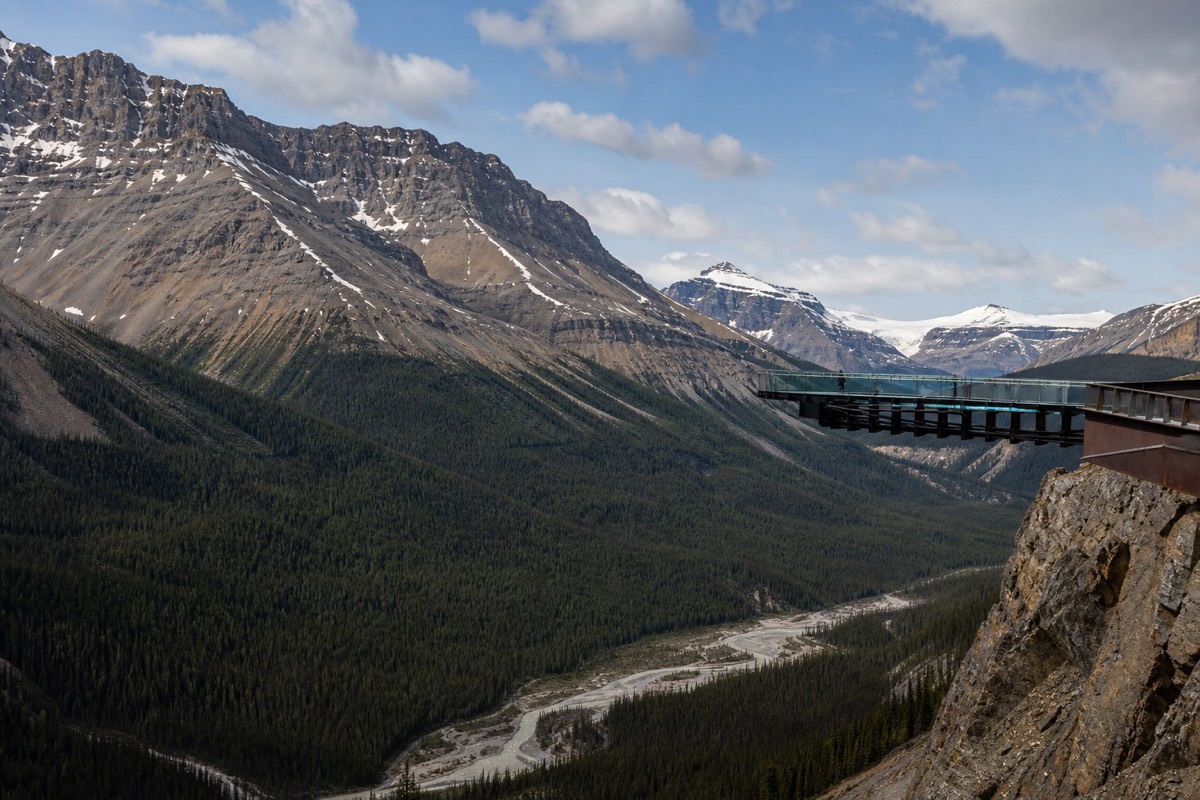
The Wilcox Pass route climbs a couple of hours to a ridge that looks straight down the Athabasca, and it is the classic photo. The signed markers near the toe show where the ice reached in past decades, a quiet lesson in how far it has pulled back. The Skywalk is a separate ticketed attraction, thrilling for the drop but not a substitute for standing on the glacier.
Which tour actually puts you on the ice?
Any tour that includes or connects to the Ice Explorer will put you on the glacier. Some full-day trips reach the Discovery Centre and let you add the ice ticket there; others build the glacier trek and Skywalk straight into the price. Which you pick depends on where you start and whether you want it all pre-arranged.
The one-way glacier journey to Jasper bundles the Ice Explorer ride, the Skywalk and lunch into one ticket, running around $273, so you step on the ice with nothing left to book. Coming up from the south, a full day tour from Banff starts around $70 and reaches the Discovery Centre, where the ice ticket is bought separately, while the Icefield Adventure day tour around $95 pairs the glacier with Lake Louise and Peyto Lake. Prices move with the season, so check the live listing before you commit. Our team at Columbia Icefield Tours lists the trips that make the walk possible, and you can compare riding the Ice Explorer onto the glacier against the guided walk before choosing.